





The Bagni di Bormio Park
Today the rich alpine vegetation consists of pines, larches, firs, gembri, dwarf pines, and heather.
From the Hotel Bagni Nuovi you enter the Bagni Park and, after walking among firs and larches, you reach...
Today the rich alpine vegetation consists of pines, larches, firs, gembri, dwarf pines, and heather.
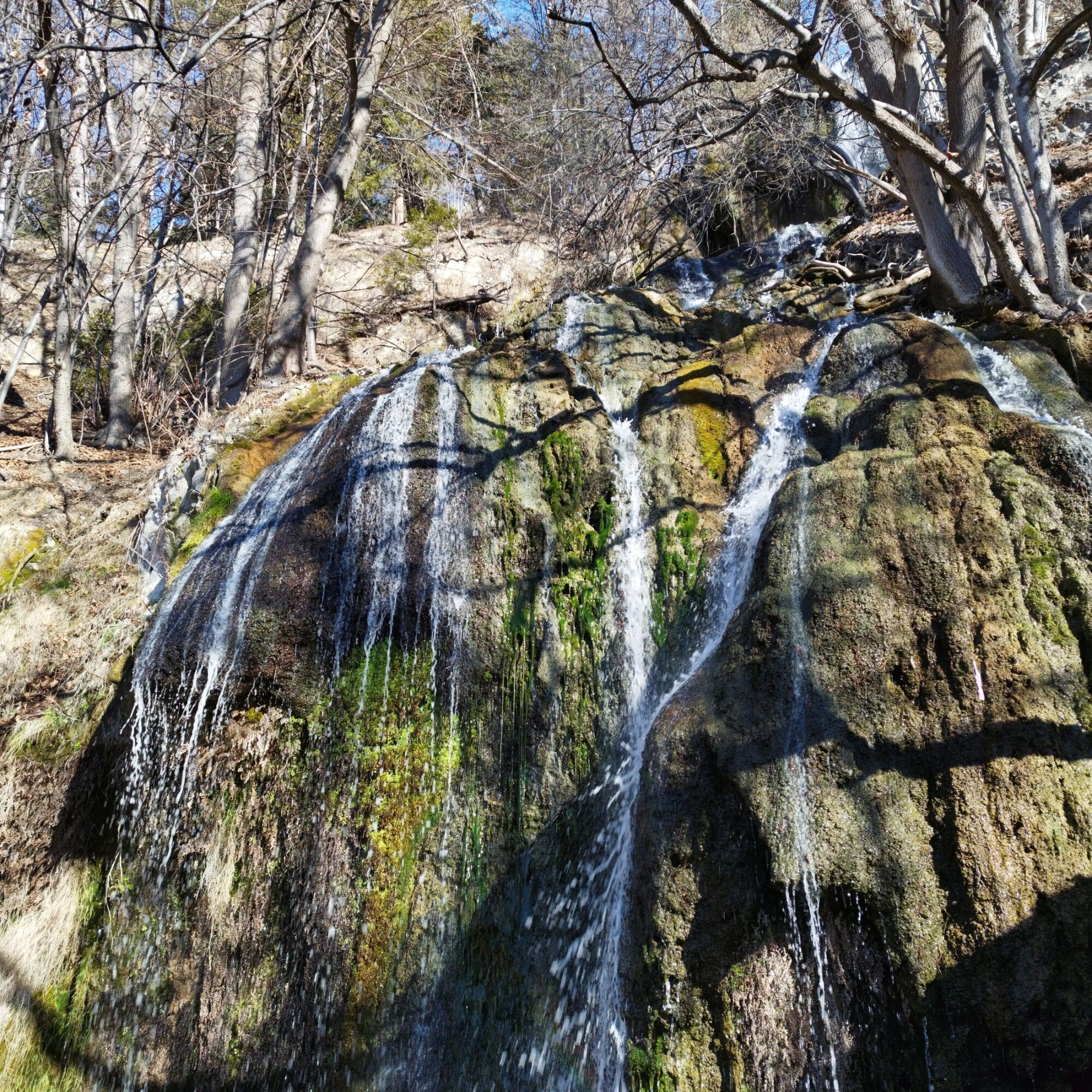
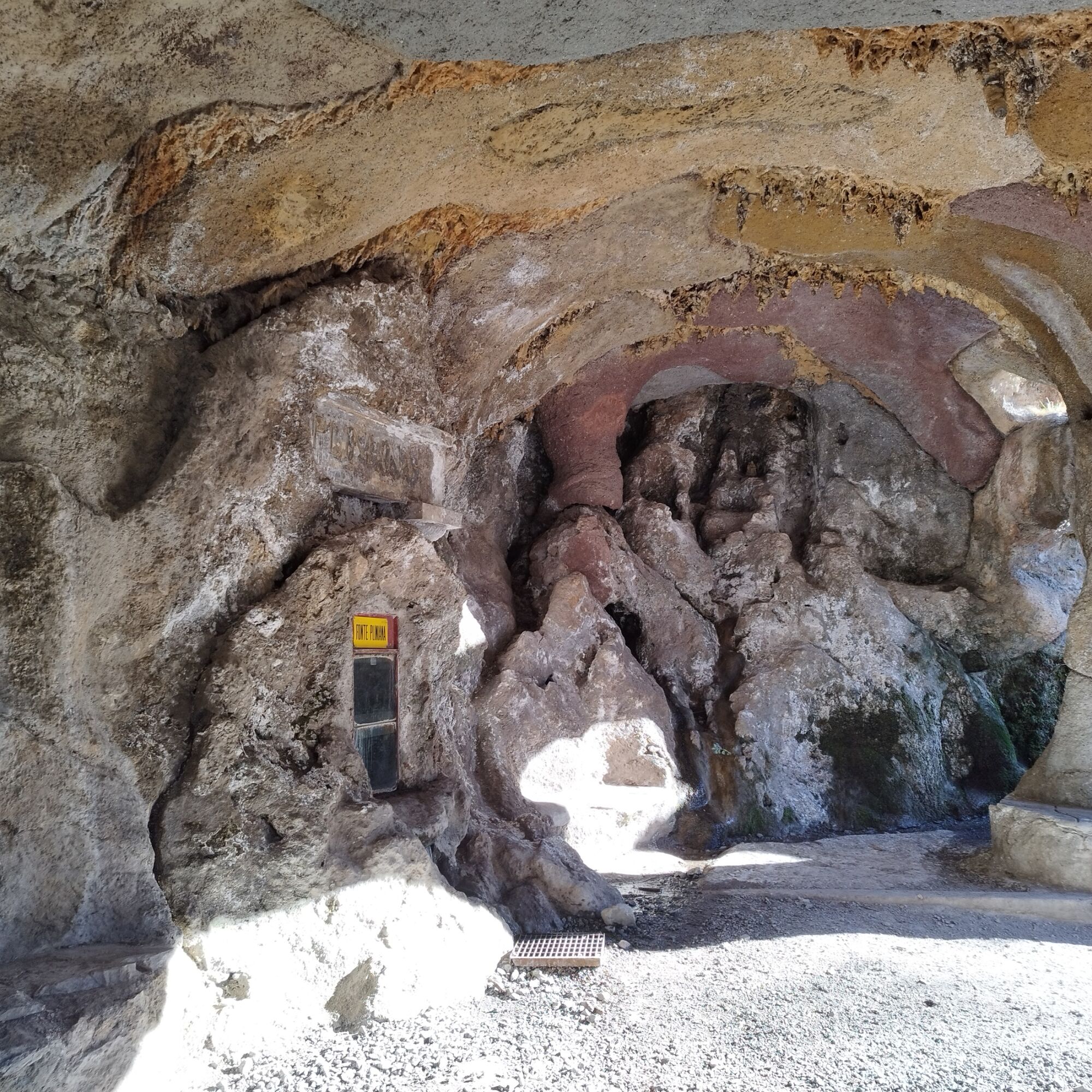
From the Hotel Bagni Nuovi you enter the Bagni Park and, after walking among firs and larches, you reach the Castellanella, the first bottling plant for thermal water. Following the route, you encounter the Cascata Cassiodora, one of the nine thermal springs and a panoramic point. At the end of the route, you are welcomed by the Fonte Pliniana: inside a particular artificial grotto, warm thermal water springs from a small fountain. Taking the small path towards the Bagni Vecchi, you find the Sorgente di S. Carlo, with its cold iron-rich water, until reaching the Bagni Vecchi and the Church of S. Martino. Taking the dirt road back to the Bagni Nuovi, you finally encounter the Sasso Garibaldi on the left and, further ahead to the right, the Vasca “S” up to the funerary monument for the German alpinists who died in 1878.

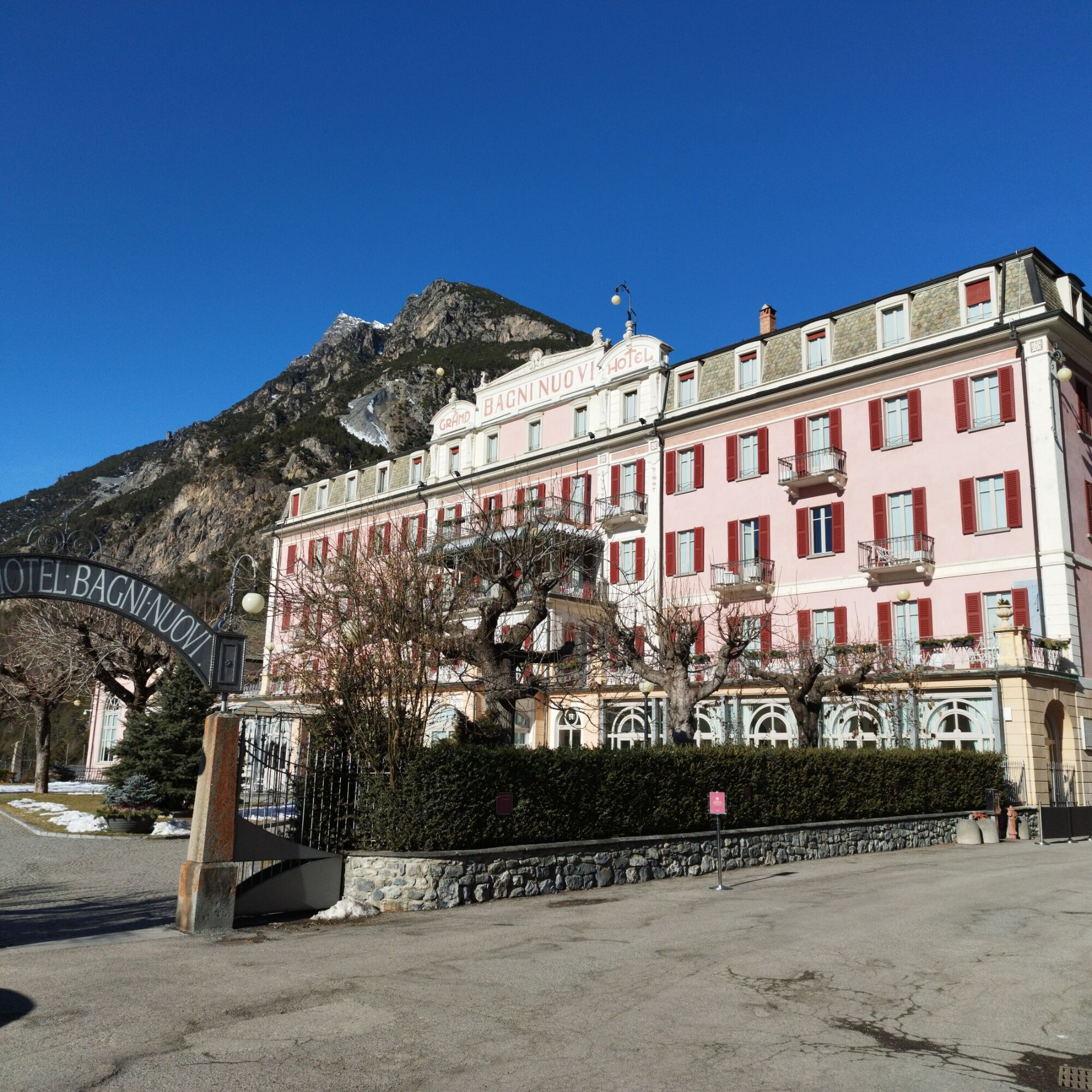

Stage 1: Grand Hotel Bagni Nuovi di Bormio
19th century liberty style, the building's construction began in 1832 to promote the thermal springs and became a destination for the European upper bourgeoisie. During the Great War, it served as the military command headquarters and, in 1915, King Vittorio Emanuele III stayed there. The halls still breathe the Central European atmosphere of the 19th century, but traces of older neoclassical decorations can also be admired on the ceilings of the Hall of Frescoes. The Belle Époque imprint characterizes the arrangement of the common rooms and their decoration with floral and grotesque motifs. The grand Ballroom, illuminated by stained glass windows overlooking the valley and Bohemian chandeliers and heated by the lavishly decorated fireplace, hosted gala dinners for the high society that frequented Bormio and the Spa. Evenings were enlivened by music spreading from the orchestra balcony.Stage 2: Cascata Cassiodora
Along the route, there is a wooden footbridge built in front of the Cascata Cassiodora, formed by the spring of the same name.
Stage 3: Fonte Pliniana
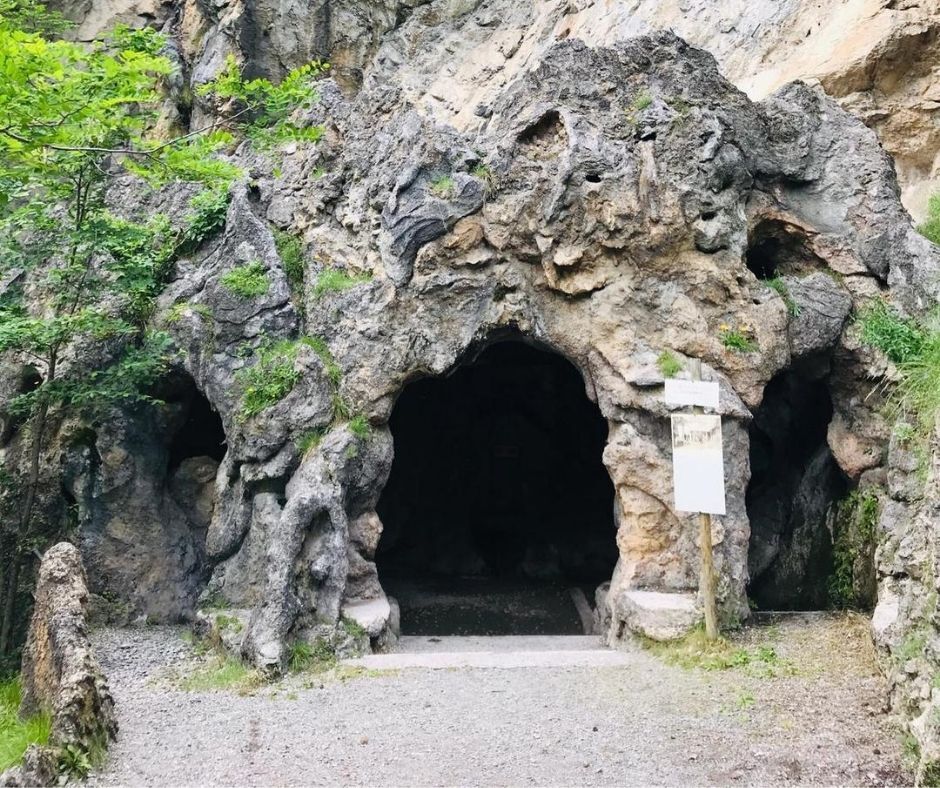
Its name comes from a citation in Pliny the Elder's naturalistic work, Naturalis Historia. Warm water springs from a crack in the rock and is protected by an artificial grotto built in 1908 to replace the previous canopy. Among the nine springs in the park, this is the purest and richest in anti-inflammatory properties, with a temperature around 38°C. Its peculiarity is that it is almost free of muddy residues, making it the most suitable for internal use. It is recommended to drink it in moderation.
The Pliniana water, in addition to being used for hydrotherapy since ancient times, was also exploited for commercial purposes. Already in 1873, the first bottling plant was established at Castellanella by the Nazzoni couple, and later, the Pliniana Company was formed for the same purpose.
Stage 4: S. Carlo Spring
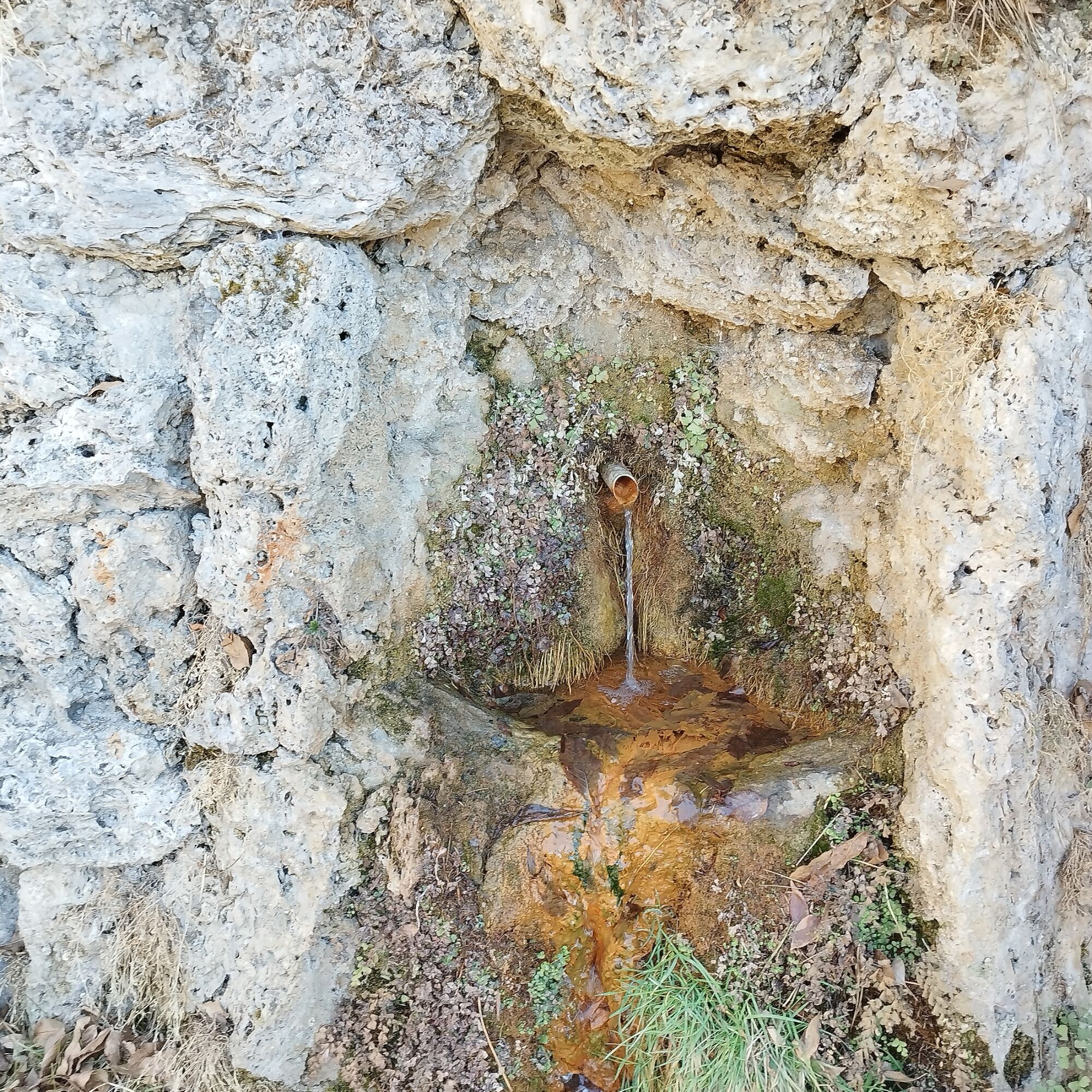
It is the only cold and slightly gaseous spring in the Baths Park, with a constant temperature around 18°-19° Celsius.
It is also known as the Eyes’ Spring because, in ancient times, its water was used as a natural eye wash and as a compress to treat conjunctivitis and styes, also providing refreshment to travelers due to its distinctive taste.
It springs near the Old Baths and was dedicated to St. Carlo in the early 1500s during the plague period.
Stage 5: Hotel Bagni Vecchi
Medieval origin. Already existing in the 12th century, they maintain a medieval structure. Located along the ancient Umbrail road, an important communication artery towards Northern Europe, they hosted illustrious figures such as Duke Francesco Sforza.
The Hotel Bagni Vecchi is a romantic hotel with typically alpine environments.
The hotel stands on the site where, in Roman times, there was the ancient Hospitium balneorum and later a xenodochium, a free hospice for pilgrims and travelers heading to Tyrol. The Castle Baths and the ancient Serra Fortress were transformed into a hotel in 1826, shortly after the inauguration of the Stelvio road, the highest pass in Europe. They thus became a place for relaxing holidays also for the Austrian Imperial Court. Perched on the rock of this ancient Castle, the hotel dominates from above (1420 m a.s.l.) the entire Magnificent Land and the wide Bormio basin, with views ranging from Vallecetta to the perennial glaciers of Cima Piazzi, in an incomparable panorama of beauty.
Stage 6: Church of S. Martino
Attached to the Hotel Bagni Vecchi complex is the Church of S. Martino, documented since 1092 and definitively attested from 1201. The church, part of an ancient system of fortifications, has a simple rectangular floor plan. Along the side walls, there are late 15th-century frescoes, and in the apse is depicted St. Martin dividing his cloak with the poor.Stage 7: Sasso Garibaldi
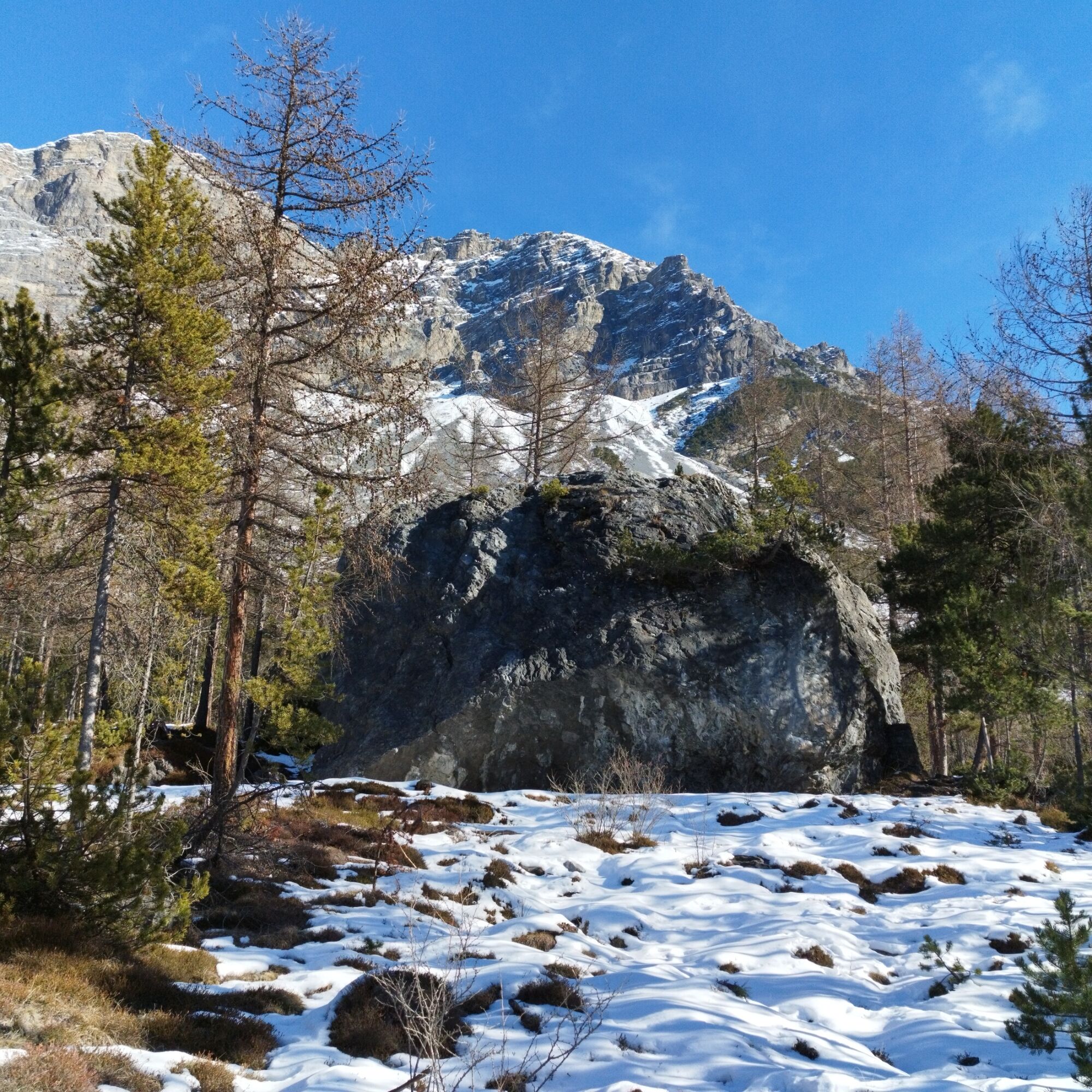
The Sasso Garibaldi is an imposing rock boulder that detached from Monte Reit and is immersed in the splendid forest of larches, firs, and dwarf pines. It is named to honor the Hero of the Two Worlds who, in 1859, allegedly climbed its summit to lead his troops against the Habsburgs, who at the time were stationed at the Bagni Vecchi Hotel.
Today, the boulder is equipped with medium-easy climbing routes to allow enthusiasts of the discipline to enjoy this enchanted place.
Stage 8: Vasca “S”
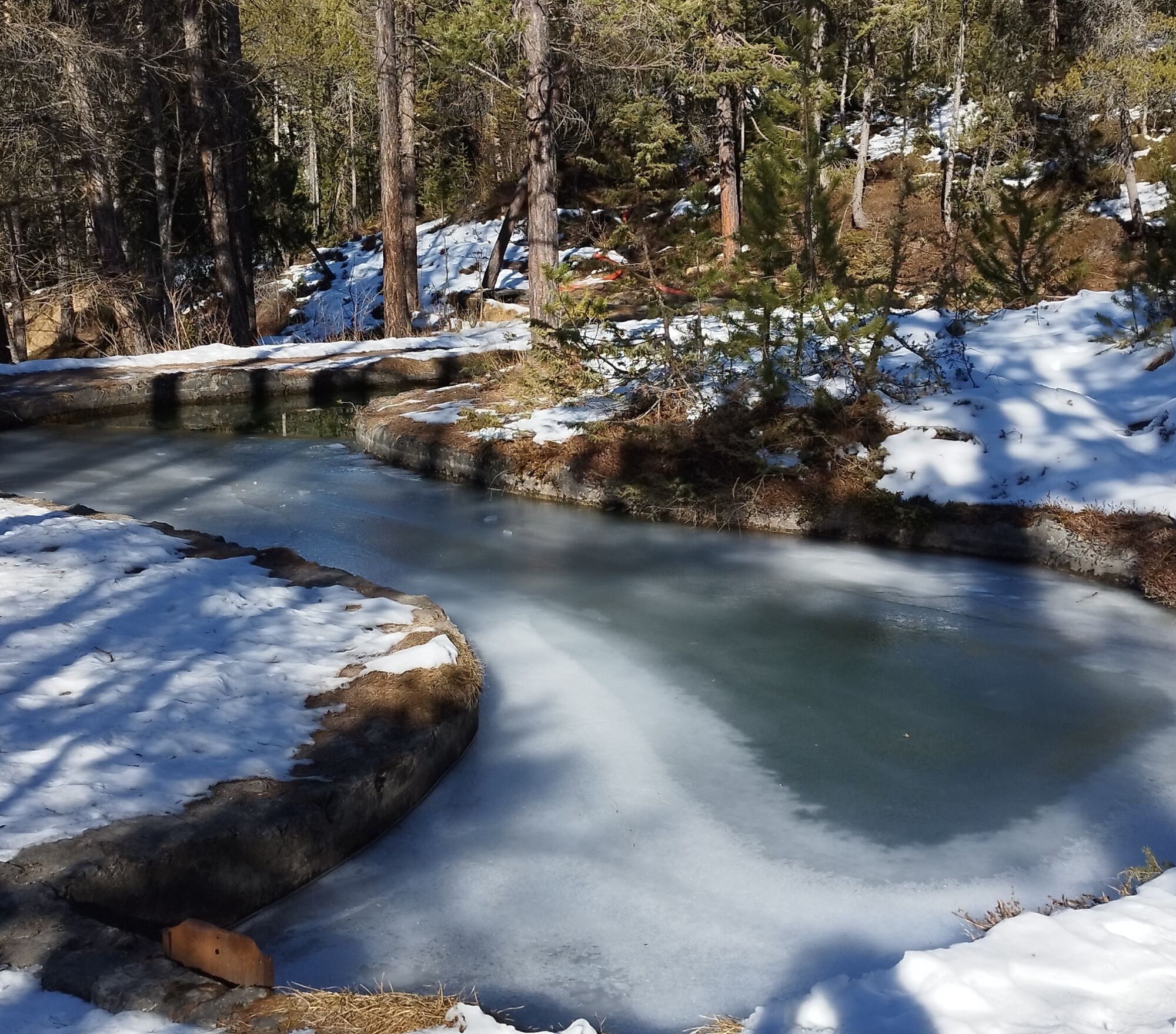
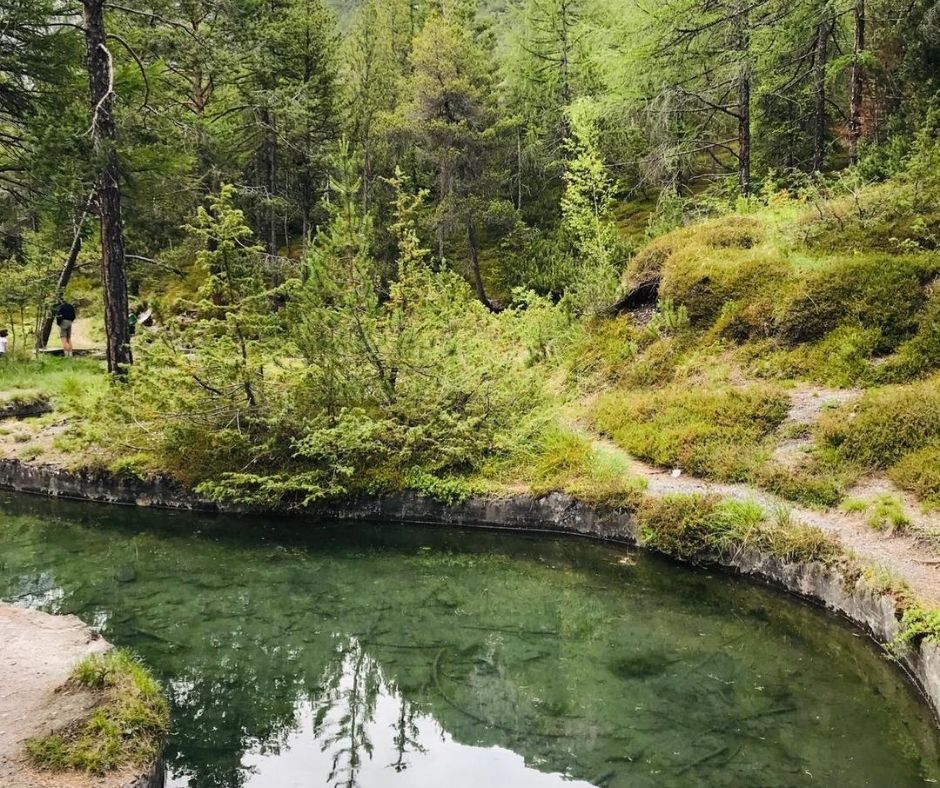
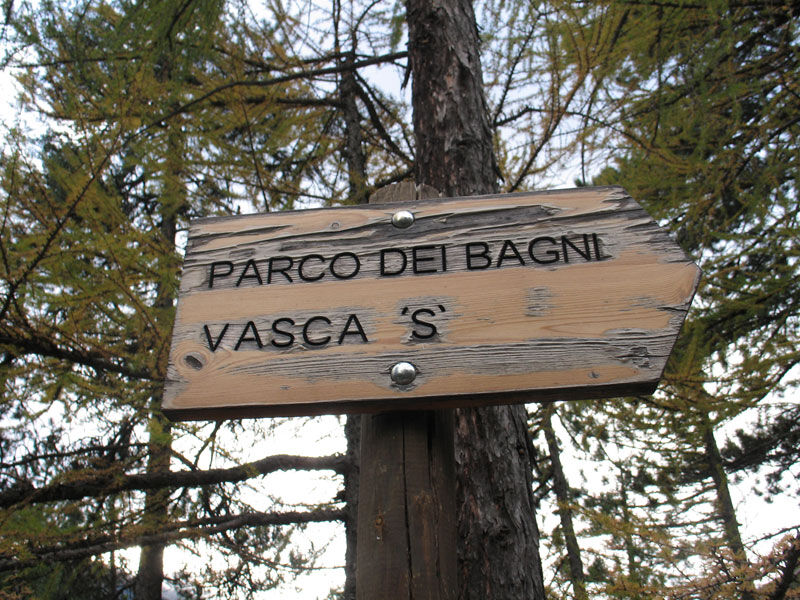
Near Sasso Garibaldi lies the Vasca “S,” a water basin with an elongated and sinuous shape reminiscent of the letter S. This basin, immersed in the lush vegetation of the Park, was once used to power, through the movement of water, the elevators of the Grand Hotel Bagni Nuovi.Stage 9: Grand Hotel Bagni Nuovi di Bormio
Return.Áno
Áno
The Bagni di Bormio trekking is quite easy, but includes some uphill sections or potentially slippery parts. Therefore, trekking shoes are essential.
The Bagni di Bormio trekking is quite easy, but includes some uphill sections or potentially slippery parts.
by car, traveling along the Stelvio road in just under 10 minutes from Bormio's historic center. This option offers more freedom, but the risk is difficulty finding parking, especially if you are not a guest of one of the two QC Terme facilities;
by bus, which departs from the Bormio bus station, also accessible by bus connecting it to Tirano;
on foot, in about an hour, but walking along a section of the Stelvio road, and then proceeding on secondary trails.
Check schedules on: www.busperego.com consider "Valdidentro, Molina, SS301 Bur./Bagni N." as the arrival stop.
The parking lot of Bagni Nuovi di Bormio
This is a loop route requiring about an hour in total, with low difficulty. It is not possible to traverse it with strollers or pushchairs due to uneven terrain.
After the beautiful walk through the woods, those who love climbing can take advantage of a natural cliff. Learn more: www.guidebormio.com
Webové kamery z prehliadky
Získajte prehľad
Vždy naživo na mieste s viac ako 9 500 webovými kamerami. bergfex Ako používateľ Pro si teraz môžete pozrieť príslušné webové kamery pre mnohé zájazdy v aplikácii zájazdy z. Môžete si tak priamo prezerať aktuálne podmienky.
Obľúbené výlety v okolí
-
4,5
Sonnenaufgang auf der Rötelspitze im Nationalpark Stilfserjoch
Turistika 2,02 km -
5,0
Wanderung/Aufstieg zur Payerhütte
svetloTuristika 15,9 km -
5,0
Ortler über Meraner Weg (vom Tal/Trafoi)
ťažkéVysoké turné 11,9 km -
4,3
Ortler – Normalweg
ťažkéVysoké turné 7,30 km -
3,5
Watervallen wandeling
svetloTuristika 4,95 km -
5,0
Ortler über Hintergrat
ťažkéVysoké turné 8,03 km -
3,4
Sta.Maria, Prà da Vau - Lai da Rims - Alp Sot - Prà da Vau
ťažkéTuristika 14,7 km -
4,8
Wanderung: Heilige drei Brunnen zur Berglhütte
svetloTuristika 5,51 km -
1,0
Tabarettahütte 2555m zur Payerhütte 3020m
Turistika 3,82 km -
5,0
Goldtoni - Wandern - Ortler
ťažkéVysoké turné 22,6 km

Turistika a stopovanie

Nenechajte si ujsť ponuky a inšpiráciu na ďalšiu dovolenku
Vaša e-mailová adresa bol pridaný do poštového zoznamu.