





PASSA MERIDIA MOUNTAIN BIKING - EAST BRANCH FROM LUNEL TO BÉDARIEUX
From the Petite Camargue to the Parc Naturel Régional du Haut Languedoc, the EASTERN branch of the Grande Traversée de l'Hérault à VTT via the Passa Meridia is accessible to all regular mountain bikers,...
On the program: - the heritage and bullfighting traditions of the Vidourle valley - the vineyards and garrigues of Pic Saint-Loup - the gorges of the Hérault and the Monts de Saint-Guilhem - the Causse du Larzac - the forests and valleys of Escandorgue and Monts d'Orb in the Parc Naturel Régional du Haut Languedoc - some of the greatest landscapes of the Terres d'Hérault Geopark
A great journey, so close...


1
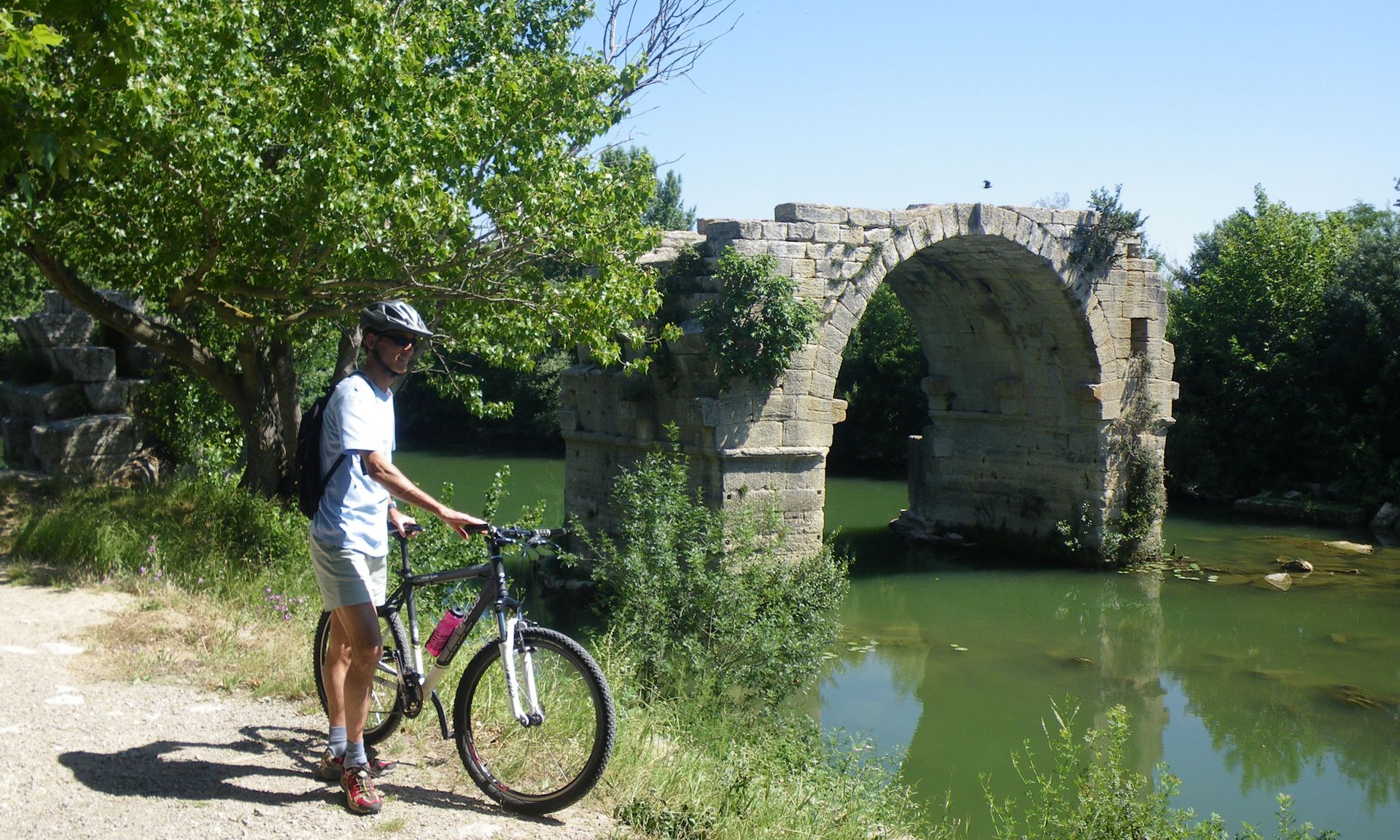
The Grande Traversée de l'Hérault à VTT via the Passa Meridia Meridia starts gently at the gateway to the Petite Camargue, at the heart of bullfighting traditions. The Vidourle, an unpredictable river, guides you to the oppidum of Ambrussum and the Roman bridge of Ambroix, a vestige of the Via Domitia. Garrigues, vineyards and welcoming villages are omnipresent and accompany the rest of your journey to a stopover in Entre-Vignes to discover a unique site promoting Languedoc vineyards: Viavino. Between vineyards and pine forests, you'll come across a number of masterpieces at Castries: an aqueduct designed by Pierre-Paul Riquet to resemble the Canal du Midi, and a château shaped like a small Versailles... Another beautiful château and a marvellous viewpoint at Assas, before returning to the vineyards and garrigues of the Pic Saint-Loup.
2
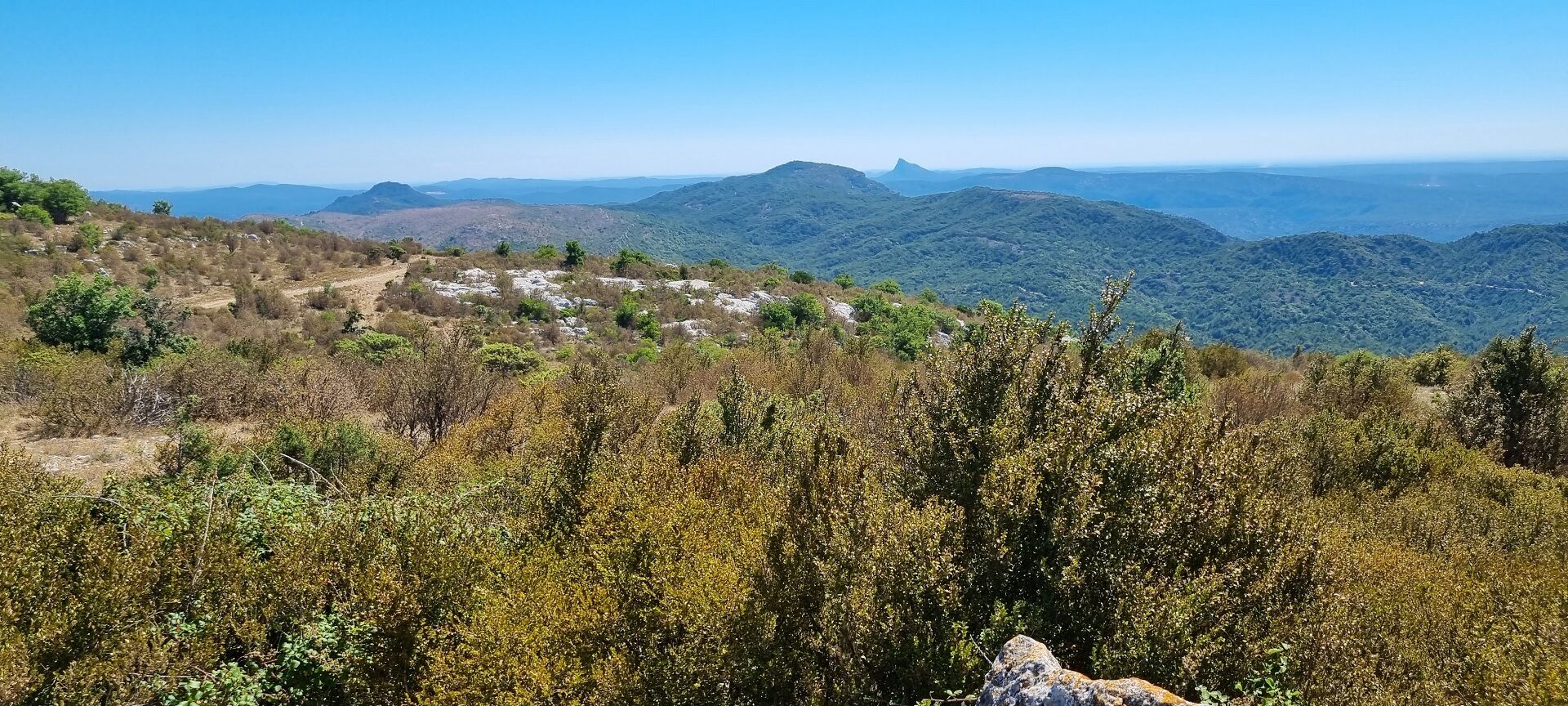
The high profiles of Pic Saint-Loup and Hortus are omnipresent. Warmly-colored vineyards and villages invite you to discover a wine-growing region with a well-deserved reputation. Thyme, juniper and boxwood accompany a pleasant, rolling route to Lauret and the first 'climb' into the world of pastoral causses. A change of atmosphere: the climb to the Causse de l'Hortus has to be earned! The garrigue and its incomparable biodiversity accompany you to the village of Ferrières-les-Verreries, where gentlemen have been blowing glass for five centuries. Your adventure continues towards the Vallon de Londres, between the old mas and the jasses (from the Latin jacere indicating where sheep sleep). In this marshy basin, the waters concentrate on springs, giving rise to more or less temporary streams, such as the Lamalou and its famous Ravin des Arcs. You'll discover charming medieval villages with incomparable Romanesque churches: Notre-Dame-de-Londres and Saint-Martin-de-Londres. Along the way, try your hand at the local sport of Tambourin. Towards the Domaine Départemental de Roussières and Viols-le Fort, numerous remains of our Copper Age ancestors line the path: oval tombs and menhir statues, Cambous village...
3
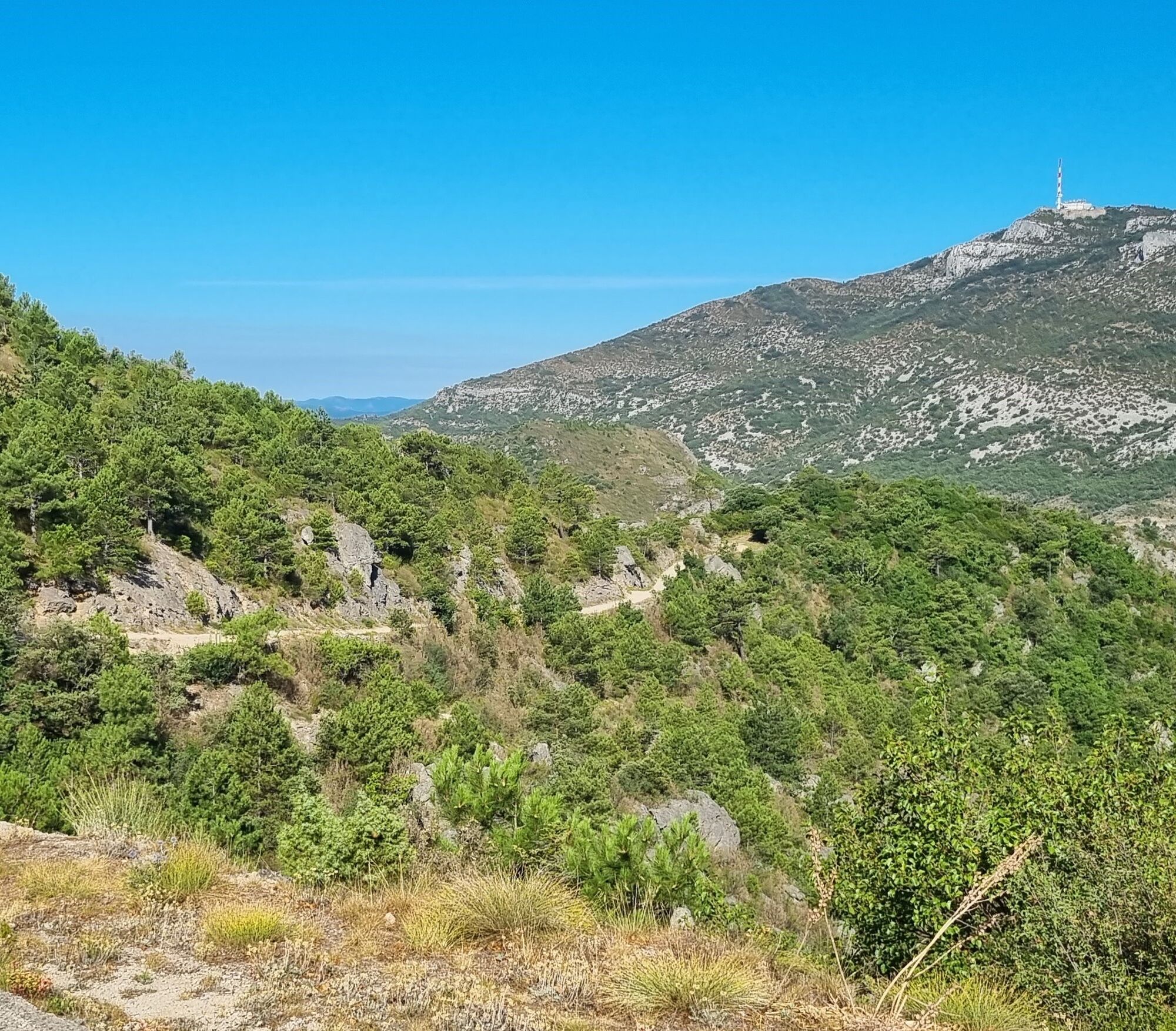
On the "drailles de transhumance" (transhumance paths), blooming with asphodels in spring, the itinerary becomes more and more rugged, offering beautiful views of the Hérault gorges and the foothills of the Cévennes and Larzac. The Pont du Diable (Devil's Bridge), listed as a World Heritage Site on the Chemins de Compostelle, marks the entrance to the Grand Site de France des Gorges de l'Hérault. A detour to Saint-Guilhem-le-Désert and the Abbey of Gellone is a must... A new change of atmosphere after Saint-Jean-de-Fos, a charming village with a rich pottery heritage. The climb to Hérault begins from the top, with marvellous views over the Hérault valley and Mont St-Baudille (848m). Steep climbs and rapid descents follow one another, immersing you in the national forest of St-Guilhem-le-Désert and its forests of Salzmann pines (the local version of the Corsican laricio pine). The Maison des Légendes at Les Plos offers a poetic and ecological stopover before reaching the Domaine départemental des Lavagnes, and tackling the climb to Larzac.
4
After a long and sustained climb, amidst lavognes, dolmens and menhirs, you reach Pic Baudille (848m). This southern promontory offers a unique panorama southwards over the plains, hills and massifs of the Hérault to the Mediterranean Sea and even the Pyrenees on a clear day. To the north, a beautiful descent leads to a surprising crossing of the Causse du Larzac. Listed as a UNESCO World Heritage Site for its Mediterranean agro-pastoral culture, the Larzac area is unique. The diverse landscapes of the Notre-Dame-de-Parlatges state forest, the dolomitic and karst steppes, the caussenard landscapes transformed by man into vast dry grasslands... are a journey within a journey, both surprising and mystical. The village of Le Caylar, overlooked by its Roc Castel, and whose central square is adorned with an astonishing sculpted tree, heralds the entrance to a new world: the Haut Languedoc.
5
L'Escandorgue welcomes you for another atypical and mystical journey through the magic of its mysterious forest and surprising geological formations, the heart of the Terres d'Hérault Geopark. Grotte de Labeil, the Buddhist temple of Lerab-Ling and mystical communities lost in the rural heights of Hérault mark the transition between Lodévois-Larzac and the Parc Naturel Régional du Haut-Languedoc. The long descent into the Gravezon valley offers a new diversity of tree species and crops. The gentle curves of the route follow the twists and turns of the Monts d'Orb national forest. Joncels offers a rich heritage and a welcoming, authentic stopover in the footsteps of the Compostela pilgrims. Lunas, a village of character at the confluence of the Gravezon and Nize valleys, offers a refreshing break.
6
After crossing the Gravezon at Lunas, the Passa Meridia leads to the St Georges chapel, a vestige of pre-Romanesque architecture dating from the 10th century. The long climb to the Dio plateau offers fine views of the Rocher du Redondel. The route then becomes gentler as we cross the Monts d'Orb state forest, with its pine, chestnut and boxwood trees, to overlook the hamlet of Dio. Visual shock is guaranteed: sheltered by white limestone cliffs and emerging from the red earth that characterizes the area around Lac du Salagou, the village nestles beneath the imposing silhouette of its castle, a veritable fortress of legend. From Dio, all that's left to do is glide gently between red ruffes and vineyards towards the Orb valley on the outskirts of La Tour sur Orb, then follow the left bank of the river to reach the town of Bédarieux.
7
Crossing Bédarieux allows you to enjoy the left and right banks of the Orb, and stroll through the town before reaching the station. From Bédarieux station, the TER SNCF/LIO train lines to Béziers, Montpellier and Lunel take you to your starting point in 2 or 3 hours, stress-free and environmentally friendly... and with your bikes!
LUNEL
LUNEL
In 'cool' mode, in 8 stages: Lunel / Castries / Lauret / Saint-Martin de Londres / Saint Jean de Fos / La Vacquerie / Roqueredonde / Dio / Bédarieux This is the version that allows you to make the most of the various sites to be discovered along the way. More accessible, it can still be completed in a week, departing Lunel on Saturday, arriving in Bédarieux and returning to Lunel by train on Sunday.
In "sporty" mode, in 5 stages: Lunel / Lauret / Saint-Jean de Fos / La Vacquerie / Joncels / Bédarieux (Tip: to shorten the first stage, start from Montpellier and use the Passa Meridia connection from the woods of Clapiers, and Montpellier's streetcar and bike networks!)
Red MTB beacons
Green signal mats
+33 4 67 67 71 71
Hérault Tourism
Grande Traversée VTT-FFC
Obľúbené výlety v okolí
-
5,0
LES VAILHÉS HIKING TRAIL
strednáTuristika 9,28 km -
4,0
CYCLE LOOP No.4 - THE HÉRAULT GORGES AND THE COL DES LAVAGNES
strednáCyklistika 53,3 km -
RANDONNEE DE PEYRE MARTINE
strednáTuristika 15,4 km -
HIKING OF THE FENESTRETTES
strednáTuristika 10,4 km -
FROM MONTPELLIER TO SAINT-GUILHEM-LE-DÉSERT ON THE GR®653 ARLES WAY TO COMPOSTELA
strednáTuristika 42,7 km -
HIKING OF THE BALCONIES OF THE HERAULT
strednáTuristika 17,9 km -
MONT SAINT-BAUDILLE HIKE
strednáTuristika 10,4 km -
HIKE OF NOTRE-DAME-DU-LIEU-PLAISANT
strednáTuristika 11,1 km -
BOUCLE CYCLO N°10 - BETWEEN THE BUÈGES AND HÉRAULT VALLEYS
svetloCyklistika 37,5 km -
WINE ROUTE IN THE SHADOW OF THE CHATEAU DE MONTFERRAND
Motorrad 49,8 km
Turistika a stopovanie

Nenechajte si ujsť ponuky a inšpiráciu na ďalšiu dovolenku
Vaša e-mailová adresa bol pridaný do poštového zoznamu.