





ROUTE – IN THE FOOTSTEPS OF JEAN-ANTOINE INJALBERT
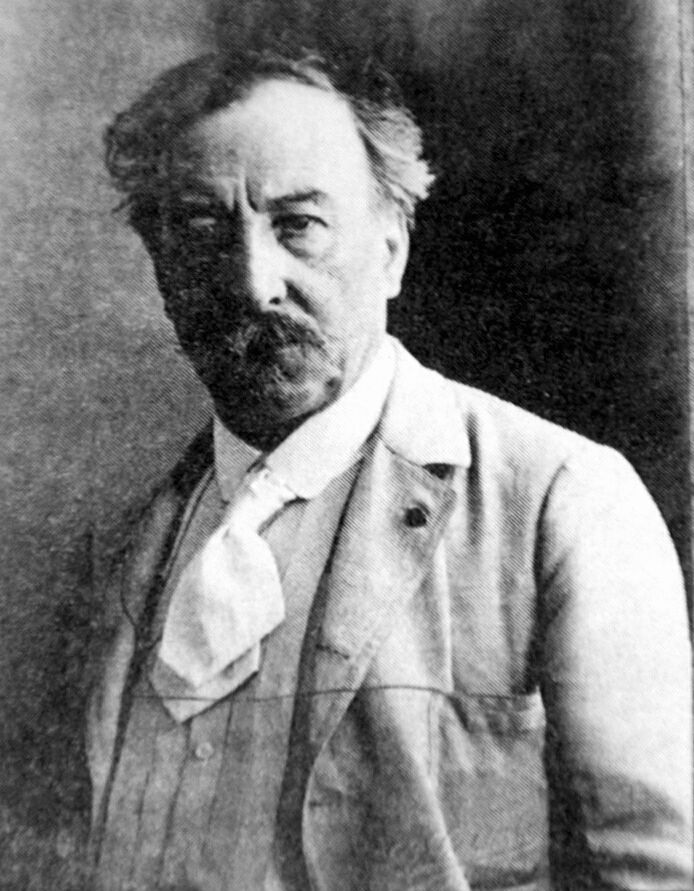
This sculptor from Béziers received the Grand Prix de Rome. He lived in his Parisian studio and in that of the Villa Antonine in Béziers. He is known for having sculpted one of the busts of Marianne and...
This sculptor from Béziers received the Grand Prix de Rome. He lived in his Parisian studio and in that of the Villa Antonine in Béziers. He is known for having sculpted one of the busts of Marianne and the three sculptures of the Mirabeau bridge. Several of his sculptures can also be found in Béziers, notably at the Plateau des Poètes.

1- Fayet Museum
The Fayet hotel was the former city residence of the Fayet family, a wealthy landowning family. It was in the second half of the 19th century that Gabriel Fayet became the owner of this house built in the 17th century. He undertook major works there to create apartments but also spaces dedicated to art. Indeed, Gabriel and his brother Léon were both painters and collectors. Gabriel's son, Gustave, inherited this taste and gathered at the end of the 19th century an invaluable collection of artworks of his time (Gauguin, Redon). In 1967, the mansion was donated to the city and became part of the fine arts museum which today has the advantage of presenting its collections in an exceptional setting, evoking a prestigious chapter of local history nicknamed "the golden age". The Fayet Hotel brings together a collection of 19th-century paintings and sculptures. In 1934, Louise Injalbert, widow of the sculptor, donated to the city nearly sixteen hundred sculptures found in the master's Parisian studio. Currently, only part of the collection is displayed. The second floor spaces are dedicated to painting; there are works by Alexandre Cabanel, Charles Labor, Joseph Noël Sylvestre, Henri Martin, Richard Burgsthal.
Opening hours: - From October 1 to May 31: Tuesday to Saturday from 10am to 12pm and from 2pm to 5pm - From June 1 to September 30: Tuesday to Saturday from 12pm to 5pm Entrance: Full price: €3.00 Reduced price: €2.00
2- Place des Bons Amis - The Bacchante with the bagpipe
Like many artists, Jean-Antoine Injalbert liked mythological subjects. The Bacchante, priestess of Bacchus, god of wine, is a theme dear to Béziers, which built its wealth at the end of the 19th century thanks to viticulture. There are different versions of the Bacchante with the bagpipe. On the Place des Bons Amis, the character is treated in the form of a term: the lower part of the character's body is enclosed in a stone sheath from which only the feet protrude. Originally intended to decorate the sculptor's garden, rue Arago in Paris, the work was installed in its current location in 1978. A second bacchante is visible in one of the lounges on the first floor of the Fayet Hotel. The sculpture made of terracotta shows the character perched on a rock. Other terracotta sketches were made by the master in view of the definitive work made of marble in 1903 and purchased by the State, which is now in the collections of the Musée d'Orsay. In the garden of the Villa Antonine, Injalbert's holiday residence, other terms, featuring Bacchus, Pan, and Monna Checca, punctuate the paths.
3- Casimir Péret
On the Place de la Révolution, a few steps from the Bacchante with the bagpipe, there is another work by Jean-Antoine Injalbert: the Monument to Casimir Péret and the victims of the 2 December 1851 coup d’état. The former mayor of Béziers, Casimir Péret was arrested and deported to Cayenne in 1851 as the head of the republican insurrection led against Napoleon III’s coup d’Etat. The monument was made on the initiative of Antoine Moulin, father of Jean Moulin, who was then a radical councilor and president of the local section of the League of Human Rights. Inaugurated in 1907, it was initially installed in the center of the square before being moved in 1978. This is not the only change the monument has experienced. Originally composed of three parts, only two remain today: the column topped by the bust of Marianne – official bust of the Republic from 1890 to 1933 – and a pedestal on which is a medallion representing the portrait of Casimir Péret. The bronze allegory of the resistance leaning on the pedestal disappeared, melted down during the Second World War occupation. A few steps away, La source vive and La source tarie welcome visitors at the entrance of the Fabrégat hotel.
4- Fine Arts Museum
This museum groups a fine collection of old Italian, Dutch, Spanish paintings and the art collection having belonged to Jean Moulin (Chirico, Soutine, Dufy).
Opening hours: - From October 1 to May 31: Tuesday to Saturday from 10am to 12pm and from 2pm to 5pm - From June 1 to September 30: Tuesday to Saturday from 12pm to 5pm Entrance: Full price: €3.00 Reduced price: €2.00
5- Injalbert Statue - Town Hall
In a niche of the grand staircase of the Town Hall, the drunken Faun or Ubriacone displays his drunkenness. His blissful face and his body barely holding its balance reveal this state. Jean-Antoine Injalbert found the right balance in the depiction of this young, vigorous body made vulnerable because of alcohol. The representation of the human body has been a predominant subject since the origins of art. But in the 19th century the Academy of Fine Arts, holder of artistic teaching, made drawing from a living model a key discipline. Moreover, the representation of a nude is called an "academy". The sculptor, who himself became a teacher at the École des Beaux-Arts in Paris, has perfect mastery in the treatment of bodies. He manages to make clay, bronze, marble or stone expressive to give life to Eve after the sin, Hippomenes, Atlas, and many other characters.
6- Quiz
The very beautiful frigate model you can admire in the chapel is:
- 1- An ex-voto dedicated to the frigate "La Sartine", vowed to "block the ports of Marseille".
- 2- The first pirate frigate model of Valras designed by Paul Riquet
- 3- The model of a frigate, built in 1780 on the orders of Louis XVI, to protect the Languedoc coasts.
Opening hours: Monday to Friday: 7:30am-12pm and 2pm-6pm / Saturday: 7:30am-12pm
7- Wine-growing Prosperity
On this square, formerly called Place de la Citadelle, is the Hôtel d’Angleterre. In the 19th century, Béziers was the world capital of wine. It was the golden age of the city, which became the richest in Languedoc.
8- Busts - Plateau des Poètes
From the tradition saying that local poets have always come to seek inspiration on this site was born the name of the public garden: the Plateau des Poètes. Sculptor Jean-Antoine Injalbert concretized this tradition when, in 1901, he proposed to offer the marble bust of the troubadour monk from Béziers, Maffre Ermengaud. He hoped thus to pave the way for a campaign to adorn the garden with busts of illustrious men of letters from the city and elsewhere. Injalbert wrote to Paul Paget, city councilor: "Thus in Rome... on the beautiful promenade of the Pincio overlooking the Tiber valley, a situation absolutely similar to the Plateau des Poètes overlooking the Orb valley, one can see (...) the busts of all those who made Italy glorious." His idea convinced, and in 1902 the busts of Maffre Ermengaud, Jean Pons Guillaume Viennet, academician, Joseph Rosier, playwright, and Victor Hugo were inaugurated. Victor Hugo's bust was destroyed in the 1950s and replaced by a work by Jean Magrou, pupil of Injalbert. The sculptor later made the busts of Gabriel Azaïs, founder of the Literary, Scientific and Archaeological Society, of his son Gabriel, a Félibrige poet (writing in one of the dialects of southern France), and of Benjamin Fabre, poet. Opening hours: October to March: 7am-6pm / April to June and September: 7am-8pm / July and August: 7am-9pm
9- The Titan Fountain
The Titan Fountain is undoubtedly Jean-Antoine Injalbert's most famous work in Béziers. This monumental fountain is composed of three parts: the bronze figure of Atlas overlooks the building, two sea horses accompanied by two playful children are arranged around the marble face of a satyr, and finally a stone base represents a cave framed by an atlante, allegory of old age, and a caryatid, allegory of youth. Fifteen years passed between the making of the first studies of the Atlas figure - in 1878, while the sculptor, then a student, was resident at the Villa Médicis, French Academy in Rome - and the inauguration of the fountain in 1893. In 1883, the State bought the work and agreed to provide the metal necessary for casting, thus fulfilling the dream of the sculptor to see his sculpture cast in bronze. The Titan was then intended for the terrace of Saint-Germain-en-Laye. However, the idea evolved and Injalbert imagined a colossal fountain as a base for the Titan and wished it to be attributed to the City of Béziers. This was done in 1885, a subscription was opened, and the final location at the Plateau des Poètes was set. Work began in 1888 and was not completed until 1892: the 72 tons of Carrara marble necessary for the making of the second part were held up at the Italian border. On 14 July 1893, the Titan Fountain was inaugurated in the absence of the sculptor who was retained in Paris, but represented by his father.
10- War Memorial
After the First World War, France launched a significant sculpture program to commemorate soldiers who died for the homeland. Each municipality favored local sculptors. It was therefore to Jean-Antoine Injalbert that the city of Béziers turned in 1920 for the making of its war memorial. The sculptor was associated with his friend, architect Victor Dalou, who proposed the monumental staircase crowned with the sculpture. Injalbert made eight war memorials for southern France (Boujan sur Orb, Lamalou-les-Bains, Laurens...). The one in Béziers is the most complex: pyramid-shaped, its base presents two groups of stone on one side, two women mourning the dying soldier, and on the other side, the victorious soldier tramples with his foot the eagle, symbol of the enemy. Marking the top of the pyramid, Nike, Greek victory, spreads her wings. When the City was about to commission the work, Injalbert, who was eighty years old, confided: "If I am appointed to make this monument, I will put into its making all that my long career has given me in experience in my art, all that there may still be in me of thought and life, all the ardor of my heart ever young, ever vibrant for my native city."
11- Return by bus
To return to the city center, you can take the bus: line 3 at the "Gare SNCF" stop towards "Gare routière-De Gaulle".
12- Villa Antonine
This former summer residence and sculptor Injalbert's studio has a garden sheltering plants, flowers, and statues. Opening hours: Tuesday to Saturday from 10:00 am to 6:00 pm.
Áno
In case of emergency, dial 112
Consider carpooling
Parking near the starting point
Získajte prehľad
Vždy naživo na mieste s viac ako 9 500 webovými kamerami. bergfex Ako používateľ Pro si teraz môžete pozrieť príslušné webové kamery pre mnohé zájazdy v aplikácii zájazdy z. Môžete si tak priamo prezerať aktuálne podmienky.
Obľúbené výlety v okolí
-
5,0
PECH BELET HIKE
svetloTuristika 4,41 km -
MOUNTAIN BIKE CIRCUIT 21: LE GRAND SALAN - ESPACE VTT/GRAVEL CAP D'AGDE MÉDITERRANÉE
svetloMountainbike 19,5 km -
LA GRANDE MAÏRE HIKE
svetloTuristika 11,2 km -
OENORANDO® LES COTEAUX D'ENSÉRUNE
svetloTuristika 8,08 km -
HIKING OF THE PASEJADE DEL CRES
strednáTuristika 14,2 km -
5,0
HIKING THE ORPELLIÈRES, TREASURES OF NATURE
svetloTuristika 4,13 km -
OENORANDO® BETWEEN THE CANAL DU MIDI AND THE VINEYARDS
strednáTuristika 10,2 km -
HIKING BETWEEN CANAL DU MIDI AND BEZIERS
svetloTuristika 7,81 km -
CIRCUIT TABARKA ISLAND – BÉZIERS MÉDITERRANÉE VTT-FFC AREA
strednáMountainbike 17,2 km -
OENORANDO® LE PECH DU THOU
svetloTuristika 7,34 km
Turistika a stopovanie

Nenechajte si ujsť ponuky a inšpiráciu na ďalšiu dovolenku
Vaša e-mailová adresa bol pridaný do poštového zoznamu.