



Tra le Colline e il Parco Fenera
From Ghemme to the Sanctuary of Boca and to the foothills of the Mount Fenera Park, with an itinerary which goes alongside the Roggia Mora and touches Romagnano Sesia, Prato Sesia, Cavallirio and Grignasco.
Departure...
Departure from Ghemme, in Piazza Castello, next to the fortification of the Ricetto (possibility to park the cars). From the piazza of the Ricetto take the road that goes alongside the Roggia Mora, passes under the motorway and reaches San Martino; pass under the railway, continue to the right on an unpaved road along the Sesia; after approx. 1 km the road abandons the river and enters Romagnano Sesia (3.5 km on unpaved road). Cross Romagnano, continue on regional road SR299 as far as Prato Sesia. Go right onto provincial road SP 31 and climb to Cavallirio (gradient 1.1%). Continue on provincial road SP 31, climbing to Boca (gradient 1.2%).
VARIANT
Outbound and inbound variant from Boca to Maggiora (gradient 1.4%). In Boca, take provincial road SP32 which climbs to San Gaudenzio (km 0.75 gradient 3%) then to the Antonellian Sanctuary of Boca (km 0,5 gradient 7.4%) and again for another km 0.6 (gradient 8.8%) as far as the top of the climb; then descend to Torchio (gradient 5.4%).
Again on provincial road SP32, enter Grignasco. In the town, you meet provincial road SP13; go left and you reach the hamlet of Garodino. Turn right, taking the unpaved road which descends to Prato Sesia passing by Cascina Baraggiotta (km 0.75) and Cascina Piana (km 0.5). Travelling the Prato-Romagnano-Ghemme route in the opposite direction, takes you back to the departure point.

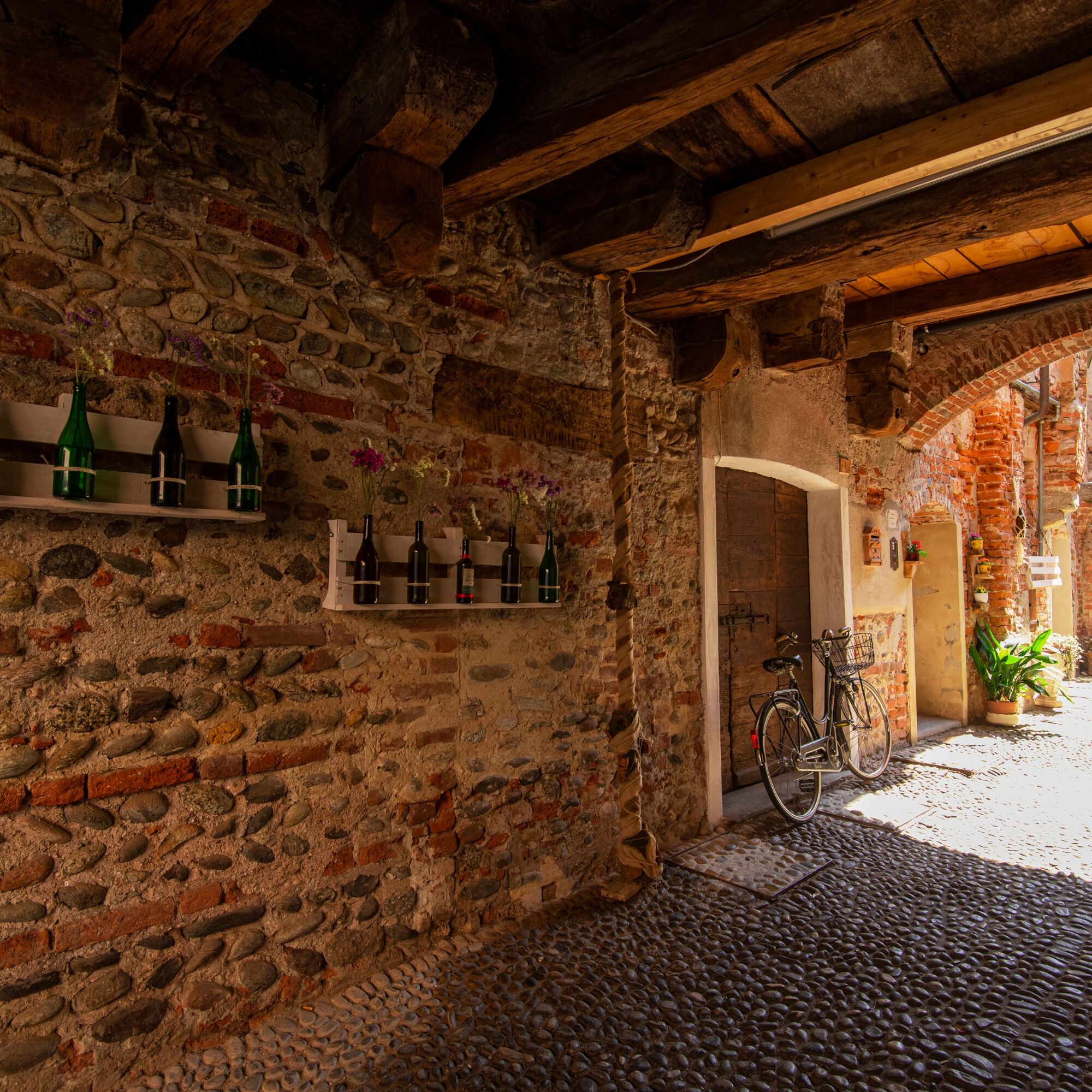

Ghemme – Castello-Ricetto: The Castle-Ricetto of Ghemme, with a rectangular plan, was built in the Middle Ages to defend local populations from raids and incursions. The complex still retains its main structure, with the houses built from river pebbles and lines in bricks, arranged on three floors. There are different buildings that present pointed windows decorated with terracotta panels.
Ghemme – Roggia Mora: Ghemme is crossed by the ancient Roggia Mora, which takes its name from Ludovico il Moro.
Romagnano Sesia – Villa Caccia and Historical Museum of Ethnography of Bassa Valsesia: Situated on the top of Mount Cucco, the Villa was designed in neoclassical style by Alessandro Antonelli as the residence of Counts Caccia di Romentino. The impressive building, surrounded by a large and well-planted park, is home to the Historical Museum of Ethnography of Bassa Valsesia. It gathers numerous objects that bear witness to the material life and the agricultural activities of the village, with special attention to wine-growing. A section is then dedicated to the tradition of Good Friday, which since 1729, every second year, relives the Passion of Jesus at Easter time.
Romagnano Sesia – Parish Church of SS. Annunziata e di San Silvano: The church stands on the remains of the abbey founded in the 11th century and presents an altar composed of a marble sarcophagus of the 5th century which held the remains of the patron saint, and the decorated pulpit of the 2nd-3rd century AD. The sacristy preserves a Pentecoste attributed to Bernardino Lanino and L’Ecce Homo by Lanino.
Romagnano Sesia – Cantina dei Santi: It is a building of two rooms with a double portico that preserves a cycle of 15th century frescoes depicting the life of King David. The destination is not yet clear and the painter is unknown, even if the name of Bartolonus from Novara has been suggested.
Romagnano Sesia – Oratory of San Martino di Breclema: It rises close to the Roggia Mora and has been documented since the 11th century, but definitely built over a previous building of the Carolingian period.
Romagnano Sesia – Medieval Bridge: At the exit of the town, along the road that leads to Prato Sesia, there are the visible remains of a medieval bridge, that bear witness to a large structure of the 12th century that joined Romagnano to Gattinara.
Prato Sesia – Parish Church of San Bernardo da Mentone: Founded in medieval times, the church was modified in the 17th and 18th centuries, with a façade of the 20th century. It preserves a Madonna del Rosario of the homonymous chapel by Giacinto Gimignani and frescoes by Tarquinio Grassi, with scenes from the life of Jesus.
Prato Sesia – Church of Madonna della Quercia: small 17th century church that preserves a work by Giacinto Gimignani (1646) depicting the Madonna della Quercia with San Giovanni Battista, San Michele Arcangelo and the client.
Prato Sesia – Castle of Sopramonte: The remains of the 12th century castle are still visible in an elevated position. The 17th century Church of the Nativity of the Virgin also stands in the same area with frescoes attributed to Giovanni de Campo. From here, you can enjoy a wonderful view of the village and the area of the Supervolcano del Sesia, one of the few cases in the world of fossil supervolcano recognised by UNESCO as Geopark
Cavallirio – Parish Church of San Gaudenzio: The first, already mentioned in 1498, underwent various renovations over the centuries, to reach the current 17th century shapes. It was renovated again during the 19th century.
Cavallirio – Oratory of San Germano: Situated in the countryside, it was already mentioned in the 11th century but rebuilt in the following centuries: it was part of the pieve of Grignasco.
Cavallirio – Tre Madonnine: In a hilly zone, between the vineyards, you meet the chapels built around the mid-19th century, with decorations of an unknown author.
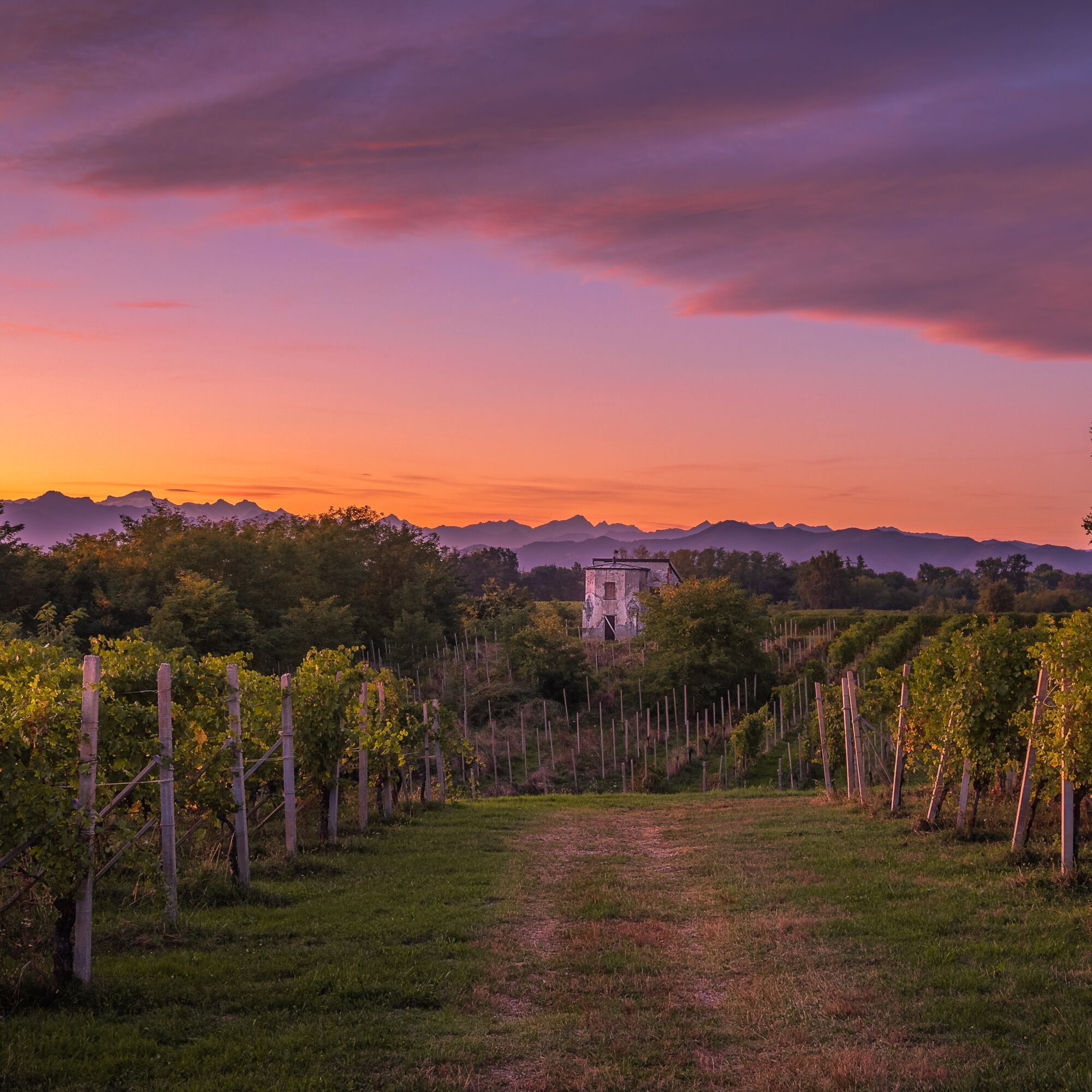
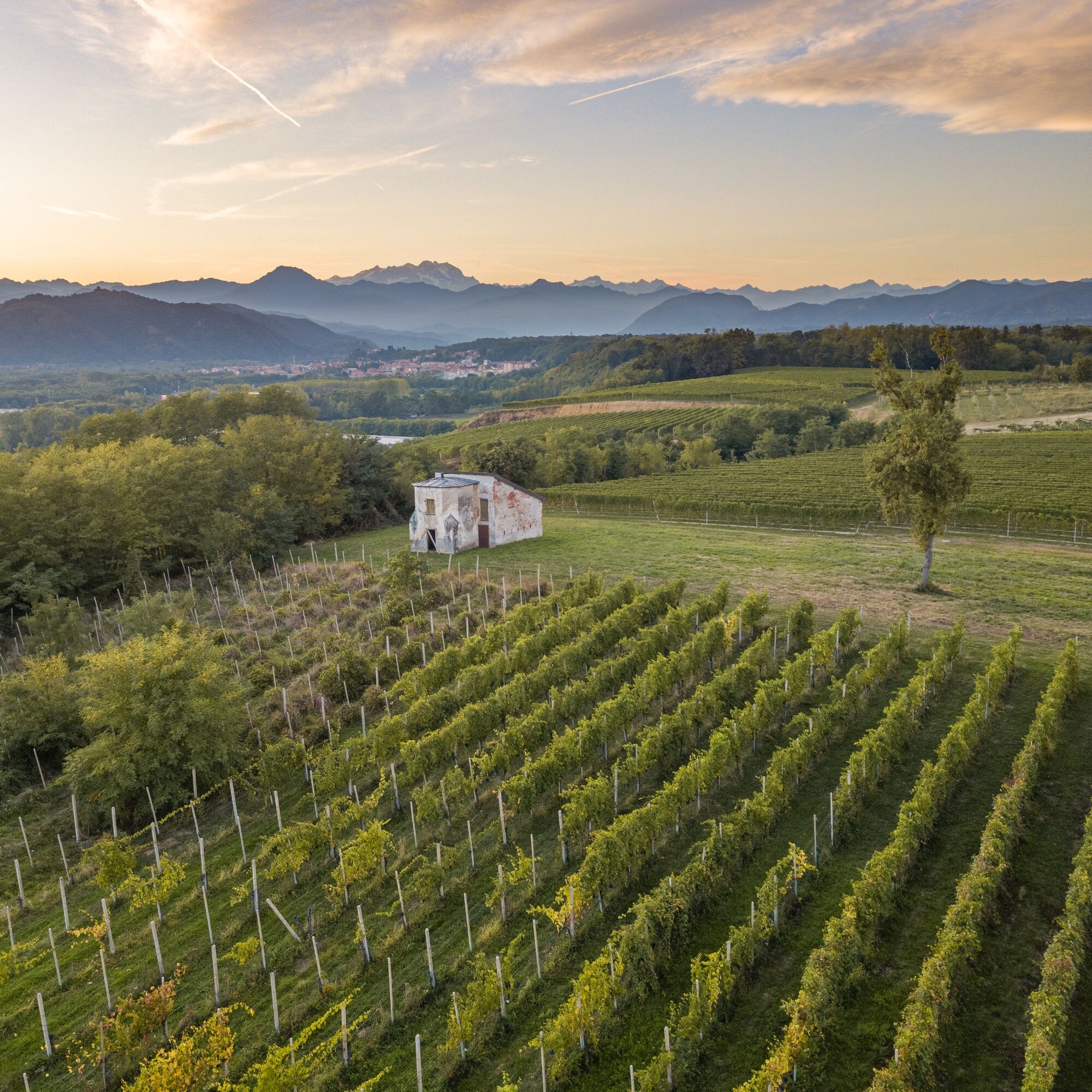
Cavaillirio – Casotti della Vigna: Situated between the vineyards, they are of a modest size with one or two rooms divided on two floors. Used as sheds for tools and hay, they were then also used as farmers’ homes. They were often marked by a symbol that indicated the family owner or they were related to good luck.
Maggiora – Church of the Holy Spirit: Built in the Baroque period over a pre-existing building, it presents paintings, stuccos, gilding and bas-reliefs on the inside. It preserves exquisite paintings by Tarquinio Grassi, Pier Francesco Gianoli and Lorenzo Peracino. The Crypt of Sant’Agapito terminated by Alessandro Antonelli is also exquisite.
Maggiora – Works by Alessandro Antonelli: Maggiora is a village with a strong Antonellian imprint: he is responsible for the arrangement of the rectangular plan: at the centre rises Casa Antonelli, the paternal residence renovated by the architect and enlarged on the basis of ingenious stylistic research; finally, the Cemetry, where he is buried, was the last of his projects, terminated by his son Costanzo.
Maggiora – Pragiarolo Racetrack and Maggiora Park: The two circuits, one dedicated to autocross and the other to motorcross, host important national and international races.
Boca – Sanctuary of the Holy Crucifix: Isolated from the centre, in the middle of vineyards, rises the majestic Sanctuary of the Holy Crucifix, work by Alessandro Antonelli; its construction took such a long time that it was completed by his son Costanzo. Since the 17th century, it has been a place of worship and devotion and is still a pilgrimage site.
Boca – Parish Church of San Guadenzio: It rises on a hill which is accessed by climbing a large staircase; of medieval origin, it was extensively modified over the centuries.
Boca – Montalbano: This small hamlet is reached through vineyards where part of the 15th century castle of Brusati Cavallazzi is preserved. Some of the frescoes depicting scenes of chivalrous life are still visible.
Grignasco – Parish Church of Santa Maria Assunta: Situated in the centre of the town, it is a masterpiece of Piedmontese Baroque. It was designed by Bernardo Vittone with an elliptical shape. It preserves works by Giuseppe Mazzola and Gandolfino da Roreto
Grignasco – Church of Santa Maria delle Grazie: This Romanesque church preserves a cycle of 15th century frescoes from the workshop of Tommaso Cagnola and Angelo de Canta.
Grignasco – Church of Santa Maria in Bovagliano: Of Romanesque origin, it is still visible in its 18th century shapes. Inside, it is possible to admire works by Francesco Gianoli and two 16th century panels of the Gaudenzi School.
Grignasco – Oratory of San Graziano and Via Crucis: Along the staircase that climbs behind the apse of the Parish church, rises an 18th century Via Crucis that reaches the Oratory of San Graziano, surrounded by vineyards, which dominates the town
Grignasco – Monte Fenera National Park: Set up in 1987, the Park covers an area of 3378 hectares and develops from 320 to 899 m above sea level; it is an area of important archaeological finds and testimonies of human presence dating from the Neanderthal man and prehistoric animals
Au total, environ 34 km sont parcourus, dont environ 5 km sur des chemins de terre ; le parcours est assez difficile, en raison des montées et des descentes continues, pour les sections à pente modérée et pour le tronçon inévitable sur la SR 229
Obľúbené výlety v okolí
-
Grand Tour UNESCO Stage 2 | From Biella to Casale Monferrato
ťažkéDiaľková cyklotrasa 178,2 km -
In the hills of Borgomanero
strednáMountainbike 41,3 km -
BicinVigna with Antonelli
strednáMountainbike 25,2 km -
BicinVigna with Antonelli - Pink itinerary
strednáMountainbike 40,9 km -
Between the Sesia and the vineyards of the Novara hills
strednáMountainbike 40,2 km -
On the Hills from Cavallirio and Boca
svetloTuristika 9,73 km -
From Grignasco to the Crag of Ara
svetloTuristika 6,94 km -
Maggiora, Piemonte/Italia
Turistika 10,1 km -
Ciclabile della Valsesia: Tappa 1 Valduggia - Frazione Valmonfredo
strednáDiaľková cyklotrasa 7,21 km -
From village to village with views of Lake Orta
strednáMountainbike 31,8 km
Turistika a stopovanie

Nenechajte si ujsť ponuky a inšpiráciu na ďalšiu dovolenku
Vaša e-mailová adresa bol pridaný do poštového zoznamu.