






From Grignasco to the Crag of Ara
The itinerary winds through the territory of Grignasco and its hamlets inside the Natural Park of Monte Fenera, at the foot of Valsesia, on a middle-easy route with a maximum altitude difference of 15...
The Park takes its name from the mountain that rises above Bassa Valsesia whose profile is recognisable from the plain. It is the departure point for excursions where history, culture and traditions merge in the nature that is typical of this part of Piedmont.
From Grignasco, possibility to leave the car in Piazza Viotti, where there is the magnificentParish Church of Santa Maria Assunta, Baroque work of Bernardo Vittone with an elliptical shape, which preserves the works of Giuseppe Mazzola and Gandolfino da Roreto. Along the staircase thatclimbs behind the apse, we find the stations of an 18th centuryVia Crucisand from here we reach theOratory of San Graziano, surrounded by the vineyards and which dominates the town. Having travelled the cobbled path alongside the oratory, take a trail which leads to the woods of invasion and neoformation, before descending gradually to the top of theColombino Quarry, one of the sites from which the carbon rocks of Monte Fenera wereextracted, to the rest area point and to the karst site ofAra Caves: at the centre of the garden flows the Magiaiga Torrent which, exceeding an imposing natural arch of calcareous rock, flows calmly in gentle bends, before resuming its path towards the Sesia. The presence of man here is centuries old,with evidence of the presence of the Neanderthal Man, such as stone artefacts and tools, and of the bear of the caves. The short flat road which leads to the hamlet of Ara starts from Casa delle Grotte. At the entrance to the village, the Church of San Grato, already mentioned in the late 16th century, is returned to us in its 18th century form.Turn right and climb along Via Martiri della Libert to reach a square where a steep climb starts to theChurch of Sant'Agata, in a scenic position on the Bassa Valsesia and on the Val Sessera, dating back to the mid-15th century, but expanded over the centuries. Heading back towards the Church of San Grato, taking the trail indicated by track780, among crops and woods, you reach acalcareous crag of Ara, where the climbers climb on 40 equipped routes; it is the most famous for the selectivity of its routes, the most beautiful for the type of rock and ideal for the autumn and spring months. You travel trail 780 backwards and having reached Ara once again at the junction with the Magiaga torrent you recover the trail signalled with track 779 and continue as far as Bertasacco where you meet the trail marked 772 that descends towards Grignasco, passing close to a promontory where you can see some remains of the Castle of San Genesio and, from here, on the mule track, you descend to the Church of Santa Maria delle Grazie to return to the starting point.

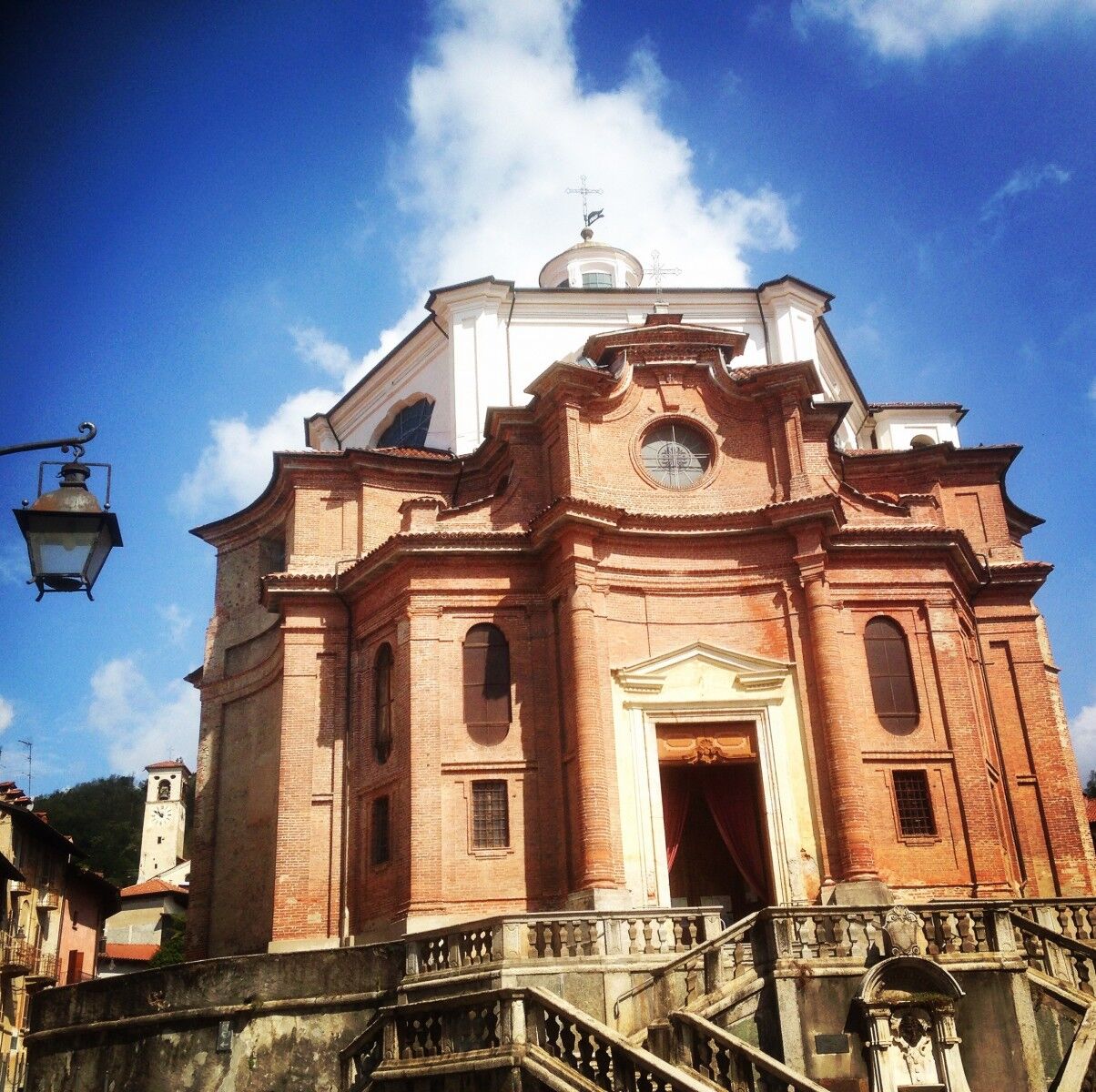
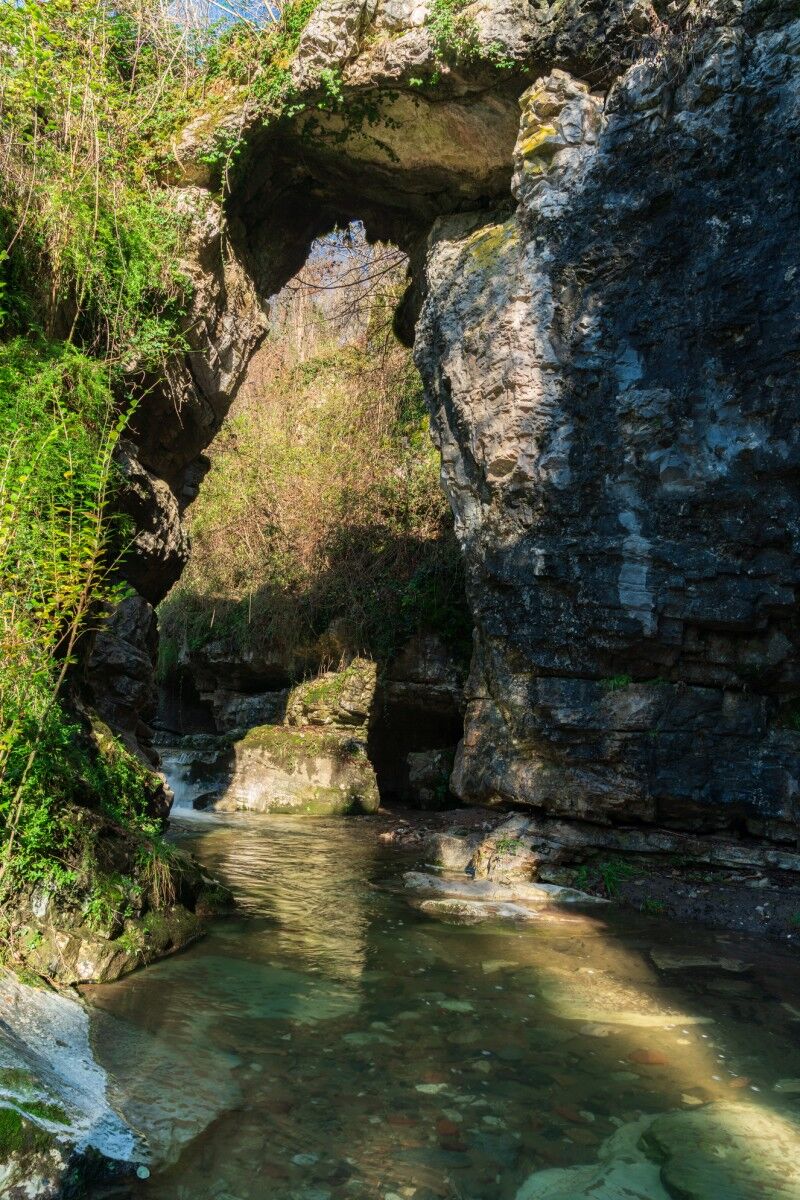
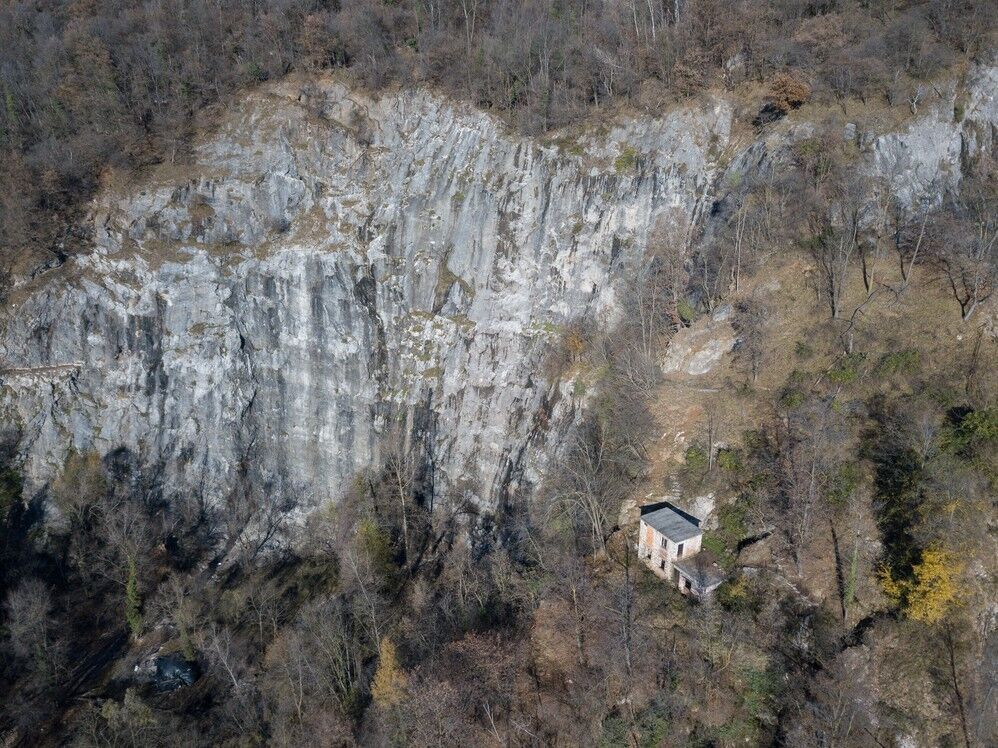
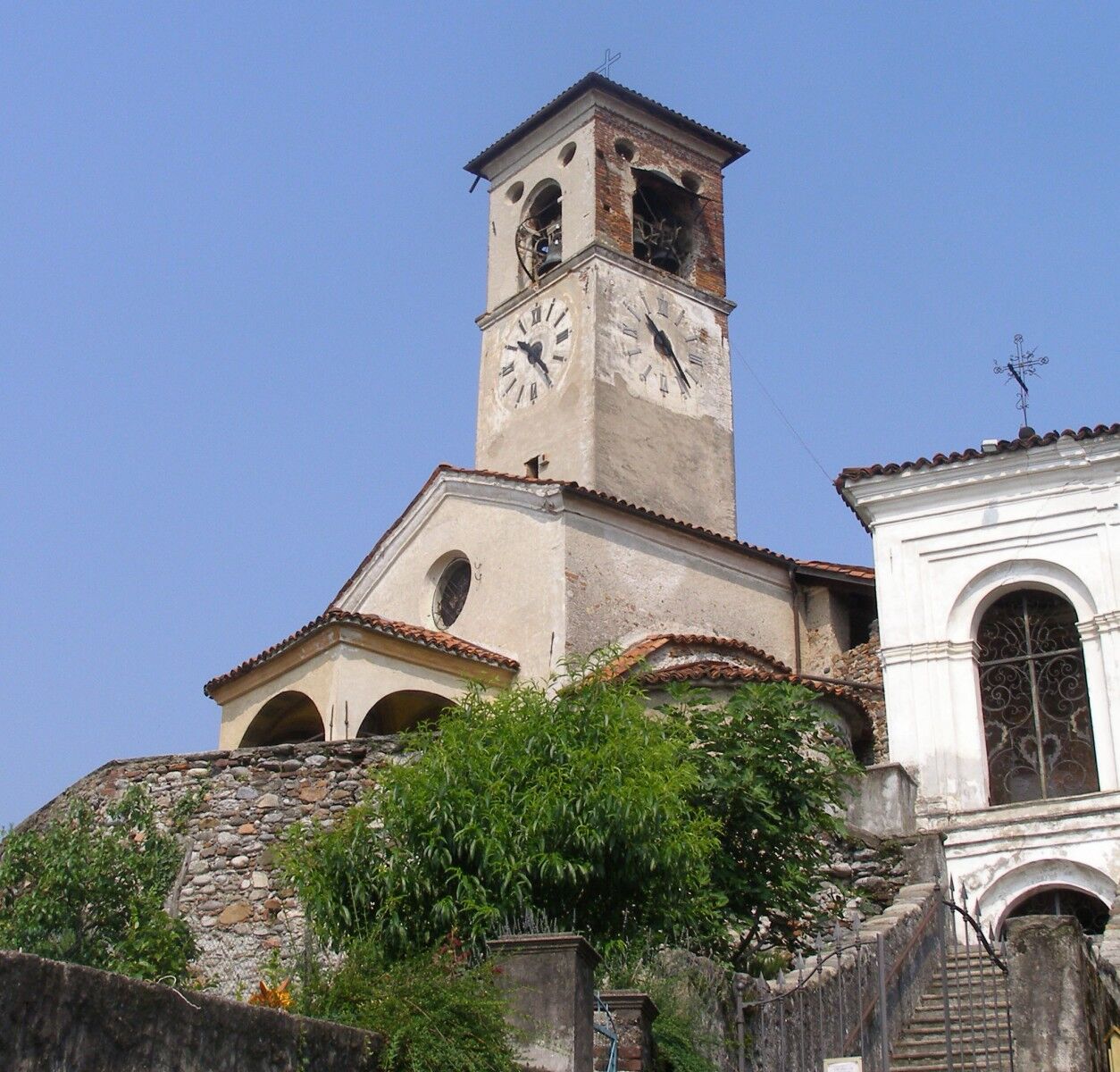
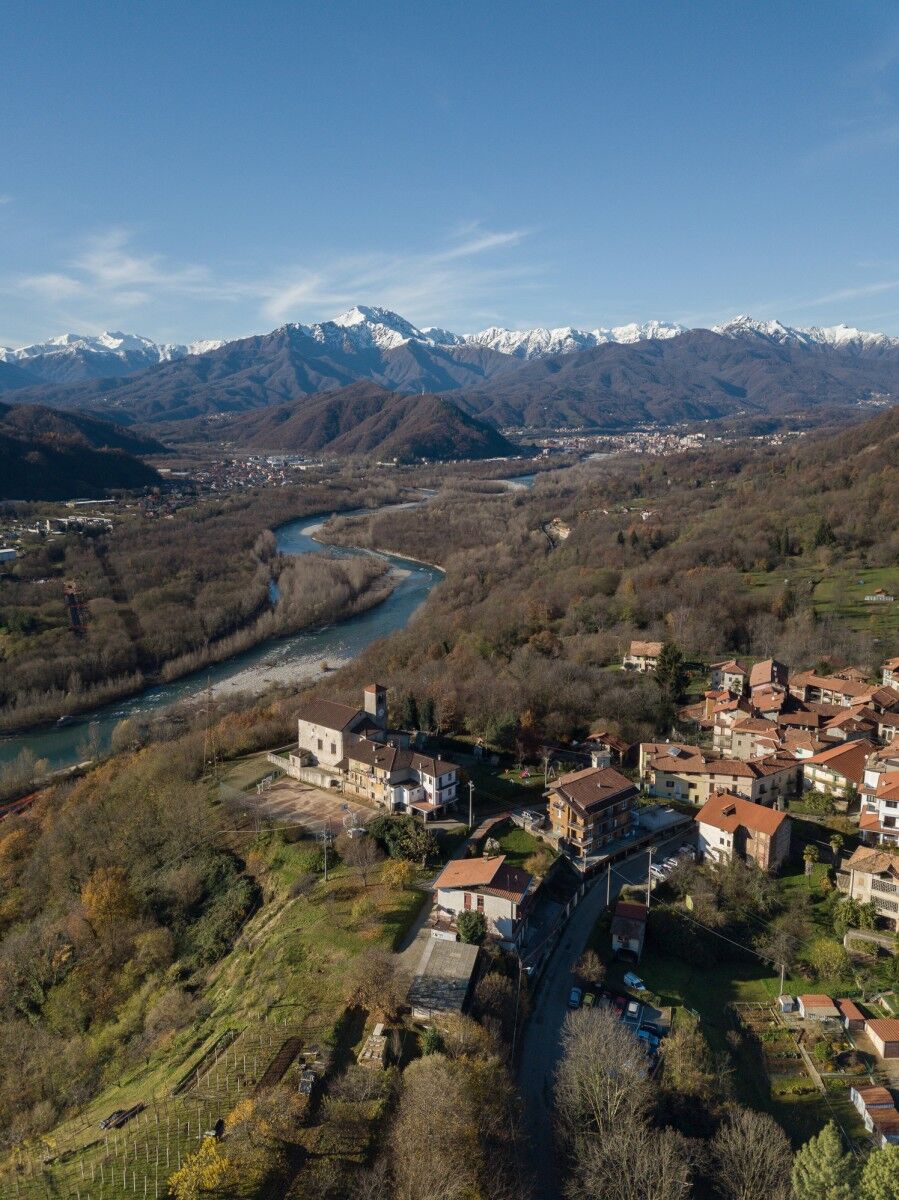

From Grignasco, it is possible to leave the car in Piazza Viotti, where the parish church of Santa Maria Assunta is proudly displayed, a Baroque work by Bernardo Vittone with an elliptical plan, which houses works by Giuseppe Mazzola and Gandolfino da Roreto. Along the stairway that rises behind the apse, we find the stations of a Via Crucis dating back to the 18th century and from here we reach the Oratory of San Graziano, surrounded by vineyards and overlooking the town. Following the cobbled lane that runs alongside the oratory, take a path that climbs through invasive and new formation woods, and then gradually descends to the top of Cava Colombino, one of the sites from which the carbonate rocks of Monte Fenera were extracted. to the equipped area and to the karst site of the Grotte di Ara: in the center of the garden flows the Magiaiga torrent, which after passing an imposing natural arch of limestone, flows placidly in soft bends, before resuming its course towards the Sesia. Here the presence of man is very ancient, with evidence of the presence of the Neanderthal Man, such as artefacts and stone tools, and of the cave bear. From the Casa delle Grotte begins the short flat road that leads to the hamlet of Ara, where at the entrance to the town there is the Church of San Grato, already mentioned at the end of the 16th century, which has been restored to us in its eighteenth-century form. Turn right and go up Via Martiri della Libertà and arrive in a square where a steep climb begins which leads to the Church of Sant'Agata, set in a panoramic position over the lower Valsesia and Val Sessera, it dates back to the mid-fifteenth century, but was enlarged in the following centuries. Returning towards the Church of San Grato, following the path marked with track 780, between cultivated fields and woods, you reach a limestone cliff of Ara, where climbers climb the 40 aided routes; it is the most famous for the selectivity of its routes, the most beautiful for the type of rock and ideal for the autumn and spring months. Retrace path 780 backwards and once you reach the hamlet of Ara at the junction with the Magiaiga stream, take the path marked with track 779 and follow it up to the hamlet of Bertasacco where you join the path marked with the 772 which descends towards Grignasco, passing by a promontory where you can see some remains of the Castle of San Genesio, and from here along the mule track you descend near the Church of Santa Maria delle Grazie and finally return to the starting point.
Áno
Grignasco: Parish Church of Santa Maria Assunta
Grignasco: Oratory ofSan Graziano
Grignasco: Ara Caves
Grignasco - Ara: Church of San Grato
Grignasco - Ara: Church ofSant'Agata
Grignasco - Ara - Calcareous Crag
Obľúbené výlety v okolí
-
On the Hills from Cavallirio and Boca
svetloTuristika 9,73 km -
In the hills of Borgomanero
strednáMountainbike 41,3 km -
The Water Valley and the Zegna Oasis
strednáCestný bicykel 79,2 km -
Grand Tour UNESCO Stage 2 | From Biella to Casale Monferrato
ťažkéDiaľková cyklotrasa 178,2 km -
BicinVigna with Antonelli - Pink Itinerary
strednáMountainbike 40,9 km -
On the roads of wool and wine
strednáCestný bicykel 56,3 km -
BicinVigna with Antonelli
strednáMountainbike 25,2 km -
4,0
From village to village with views of Lake Orta
strednáMountainbike 31,8 km -
Green loop trail of Lake Orta
ťažkéMountainbike 50,4 km -
Tra le Colline e il Parco Fenera
ťažkéMountainbike 39,4 km
Turistika a stopovanie

Nenechajte si ujsť ponuky a inšpiráciu na ďalšiu dovolenku
Vaša e-mailová adresa bol pridaný do poštového zoznamu.